Eco-Anxiety: How to Live Consciously When the World Faces Crisis
Eco-Anxiety: How to Live Consciously When the World Faces Crisis
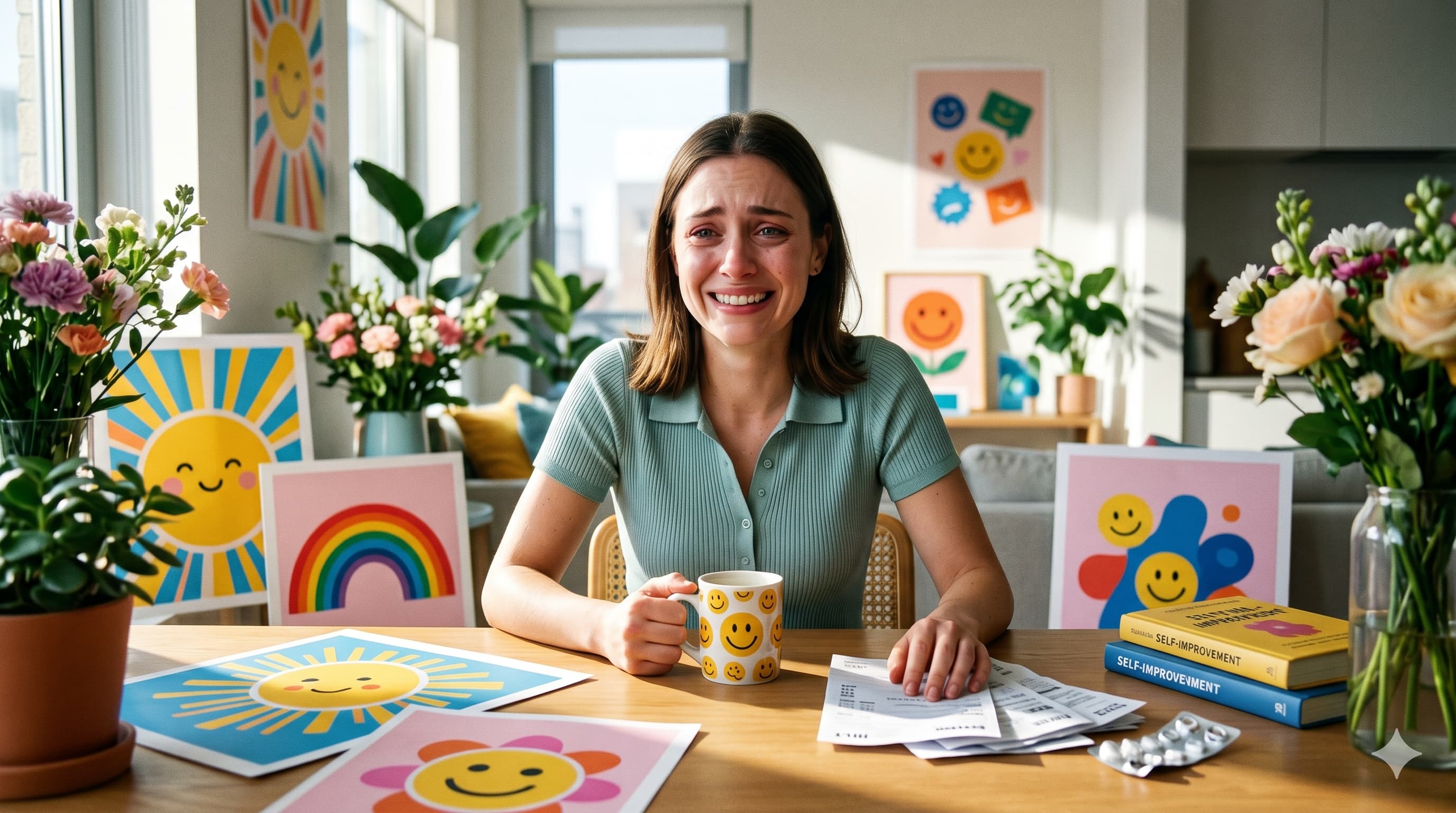
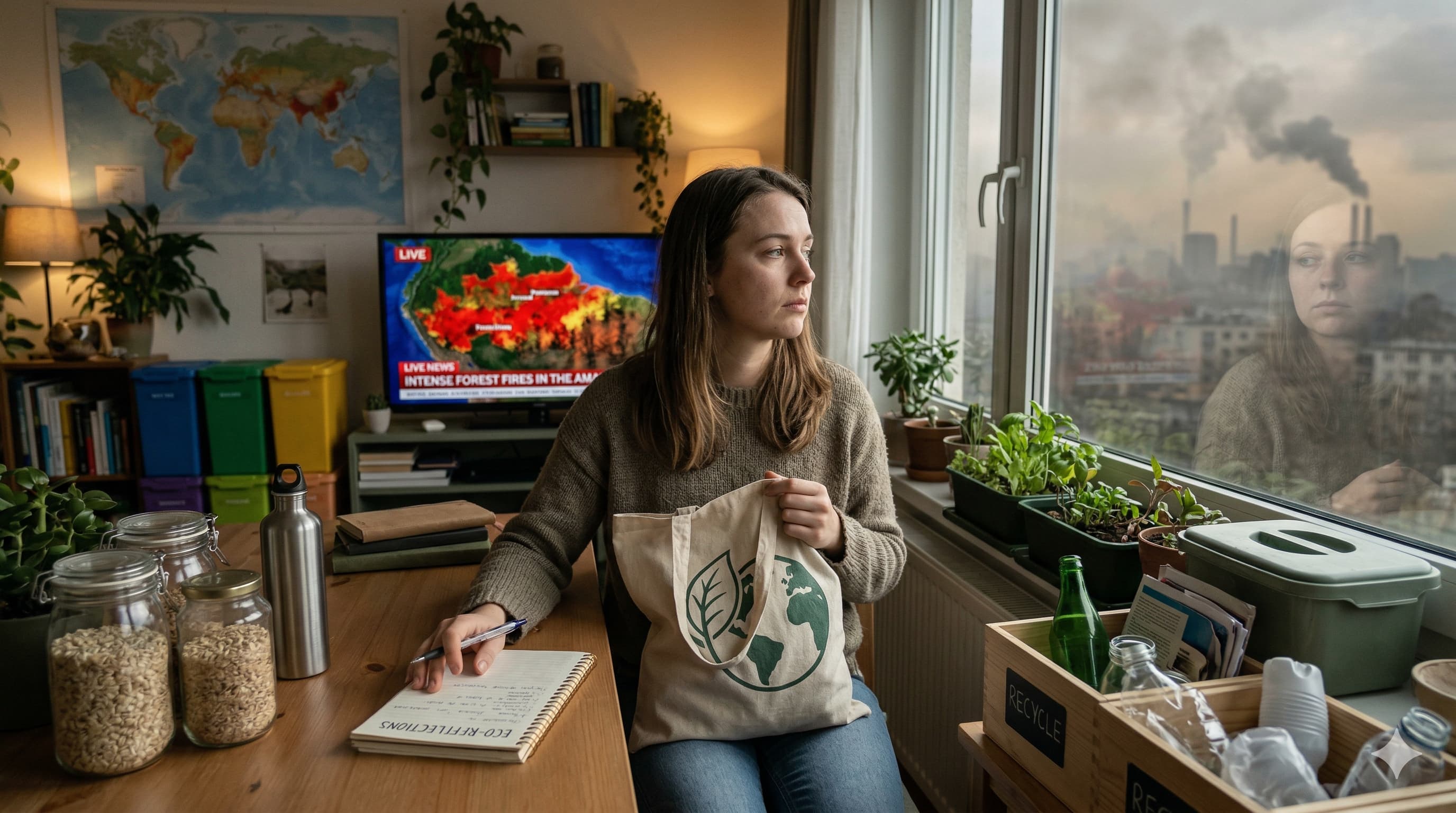
You open the news and read again about record temperatures, dying species, melting glaciers. You feel tightness in your chest, helplessness, anxiety. Sometimes — guilt for continuing to eat meat, fly planes, use plastic. This is not hypochondria or exaggeration. This is eco-anxiety — the response of a rational person to a real planetary-scale threat.
Eco-anxiety is one of the fastest-spreading psychological phenomena of our time. Understanding its nature, distinguishing it from paralyzing fear, and finding a path to conscious action — that is what this article is about.
What Is Eco-Anxiety: A New Word for an Old Fear
The American Psychological Association (APA) introduced the concept of «eco-anxiety» into official psychological discourse in 2017, defining it as «the chronic fear of environmental doom». Important to understand: eco-anxiety is not a disorder or a disease. It is an adaptive response to a real threat. Anxiety is appropriate when there is a real cause for concern — and the climate crisis is precisely such a cause.
Solastalgia — Grief for a Lost Place (Glenn Albrecht)
Australian philosopher Glenn Albrecht coined the term «solastalgia» in 2003 to describe a specific form of grief — distress caused by the degradation of one's familiar living environment. This is the grief of a farmer watching drought destroy the fields of their ancestors. The grief of a coastal city resident watching the sea swallow the shore where they grew up.
Solastalgia differs from ordinary nostalgia in that the person hasn't left — the place itself has changed or is disappearing. In his book «Earth Emotions», Albrecht describes a wide spectrum of ecological emotions — from «tierratrauma» (distress about the planet's future) to «solastalgia» and «ecological grief».
Caroline Hickman's Lancet 2021 Study: 59% of Youth Experience Eco-Anxiety
In 2021, researcher Caroline Hickman of the University of Bath and colleagues published a major study in Lancet Planetary Health: 10,000 young people (ages 16–25) across 10 countries. Results were alarming: 59% experience severe eco-anxiety. 84% are at least moderately concerned. 68% feel governments are «betraying youth and future generations». 56% believe humanity is «doomed». These are not fringe fears — this is a mass psychological phenomenon requiring serious attention.
When Care Becomes Paralyzing Fear
Concern about the state of the planet is a sign of good sense and empathy. But sometimes it crosses a line and becomes paralyzing. How do you distinguish healthy concern from pathological anxiety?
Symptoms of Eco-Anxiety
Moderate eco-anxiety manifests as concern, motivation to act, and the desire to learn more. Problematic eco-anxiety includes: intrusive thoughts about climate collapse that can't be stopped; sleep disruption from ecological worries; refusal to make long-term plans («what's the point if everything collapses anyway»); relationship deterioration from eco-themes; inability to enjoy life due to environmental stress.
The Difference Between Healthy Concern and Anxiety
The key marker: healthy concern motivates action; anxiety paralyzes it. If ecological thoughts lead you to sort waste, save water, and support organizations — that's adaptive response. If they prevent you from sleeping, working, and enjoying life — that's an anxiety disorder needing support.
From Anxiety to Action: The Karmic Path
From a karma perspective, eco-anxiety is a signal. A signal that your values are not aligned with your actions. Anxiety as the gap between what you consider important and what you actually do. This gap can only be closed through action.
Individual vs. Systemic Action
One of the most destructive myths about ecology: «One person doesn't make a difference anyway.» This is only partly true. Systemic changes are indeed more important than individual ones. But individual action matters not only for climate, but for psychological health: it reduces anxiety, restores agency (the sense that I influence the situation), and creates social connections with like-minded people. Read more about ecology and karma in our articles on ecology and karma and ethics of consumption.
Why Knowledge Without Action Worsens Anxiety
The eco-anxiety paradox: the more a person knows about environmental problems but does nothing, the stronger their anxiety. Knowledge without action creates cognitive dissonance — tension between values and behavior. Action, even a small one, releases this tension. This is why «being environmentally active» is not only a contribution to the planet but a form of psychological therapy.
5 Eco-Activism Practices Without Burnout
Environmental activism has its own burnout problem. Research shows that people working in environmental protection have elevated rates of emotional exhaustion. How to act sustainably?
1. Limit Eco-News Consumption
This is not a call to ignorance. It's a call to information hygiene. Set specific time for reading environmental news (e.g., 20 minutes in the morning) rather than a continuous stream throughout the day. Subscribe to sources that report on solutions, not just problems.
2. Focus on One Specific Action
Trying to change everything at once is a sure path to paralysis and burnout. Choose one area that resonates with you: diet, transportation, energy use, activism. Make one concrete change and maintain it for several months before adding the next.
3. Find Community
Ecological action alone is effective but emotionally draining. Join a local group or online community of people with similar values. This creates social support and reduces the sense of facing a global problem alone.
4. Celebrate Small Wins
Ecological changes work on a multi-decade horizon — this makes them hard to feel. It's important to notice and celebrate small wins: a week without plastic bags, the first bike commute instead of driving, a successful conversation with a neighbor about recycling. These small wins sustain motivation.
5. Balance Awareness with Rest
Allow yourself «ecological vacations» — periods where you intentionally don't think about ecology. This is not a betrayal of values. It's caring for the psychological resource that enables you to act long-term. A burned-out activist doesn't help anyone.
Ecological Karma
Eco-anxiety is a values signal. It tells you that the fate of the planet matters to you. That's good. The task is to channel this anxiety into concrete actions that simultaneously reduce your ecological footprint and restore your psychological health. Take the test at karm.top — the «ecology» category in the test is directly related to how your daily choices affect the planet and your karma.
FAQ
Is eco-anxiety a disease? No. The APA defines eco-anxiety as a normal response to a real threat. It becomes a problem only when it significantly impairs quality of life — at that point, consulting a psychologist is worthwhile.
How do I explain eco-anxiety to loved ones who don't understand it? Try speaking concretely: «I'm worried about specific environmental changes because they affect the real lives of real people». Avoid apocalyptic framing — it intensifies anxiety, not understanding. Offer specific joint actions instead of debates.
Where do I start when everything feels meaningless? Start with the smallest concrete action that's within your power. Don't try to save the whole world — do one small thing. The accumulation of small acts is how large changes happen.
Subscribe to new content
We publish articles about karma, self-discovery and spiritual practices. No spam — only the good stuff.
We never share your email with third parties. Unsubscribe anytime.