The Karma of Neurodiversity: How We Treat People Whose Brains Work Differently
Picture a child who can't sit still, interrupts teachers, loses notebooks constantly, but multiplies three-digit numbers in their head faster than a calculator. For the system, they're a problem. For the neuroscientist, they're a person whose attention is organised differently. The gap between those two perspectives determines not just one child's fate — it defines the collective karma we accumulate by designing a world that only accommodates one type of brain.
From Diagnosis to Identity: What Neurodiversity Actually Means
Australian sociologist Judy Singer — who is herself autistic — coined the term "neurodiversity" in 1998. The core idea is straightforward: variation in neurological profiles across a population is as natural as variation in physical bodies. ADHD, autism, dyslexia, dyspraxia, dyscalculia — these aren't breakdowns requiring repair, but variations requiring understanding.
This doesn't mean denying real difficulties. Someone with severe autism may need ongoing support. Someone with dyslexia in a text-saturated environment faces genuine barriers. Neurodiversity as a concept doesn't say "everything is fine" — it says "we designed the environment wrong." That's a fundamental distinction.
The medical model of disability says: the person has a defect that needs fixing. The social model says: the person encounters barriers that society created. Neurodiversity goes further: some differences carry not only costs but advantages — just not in the environment we've defaulted to treating as the only possible one.
The Cognitive Advantages of Neurodiverse Minds
Neuroscience over the past decade has accumulated enough data to discuss this without romanticisation, but also without dismissal. People with ADHD show elevated capacity for divergent thinking — the generation of multiple unconventional solutions. A 2020 meta-analysis in the Neuropsychology Review found that adults with ADHD significantly outperform neurotypical peers on creative thinking tasks.
Autistic people show enhanced systems thinking and an ability to notice patterns that neurotypicals overlook. Simon Baron-Cohen's research at Cambridge demonstrates that autistic people show exceptional ability in tasks requiring precise attention to detail and detection of hidden regularities.
People with dyslexia — traditionally described as having a "reading problem" — show advantages in global visual-spatial reasoning. Researchers at Harvard and Rochester found that dyslexic individuals outperform neurotypicals on tasks requiring processing of ambiguous or noisy data to find underlying patterns. This matters enormously in science, art, and entrepreneurship.
The Karma of Homogeneous Environments
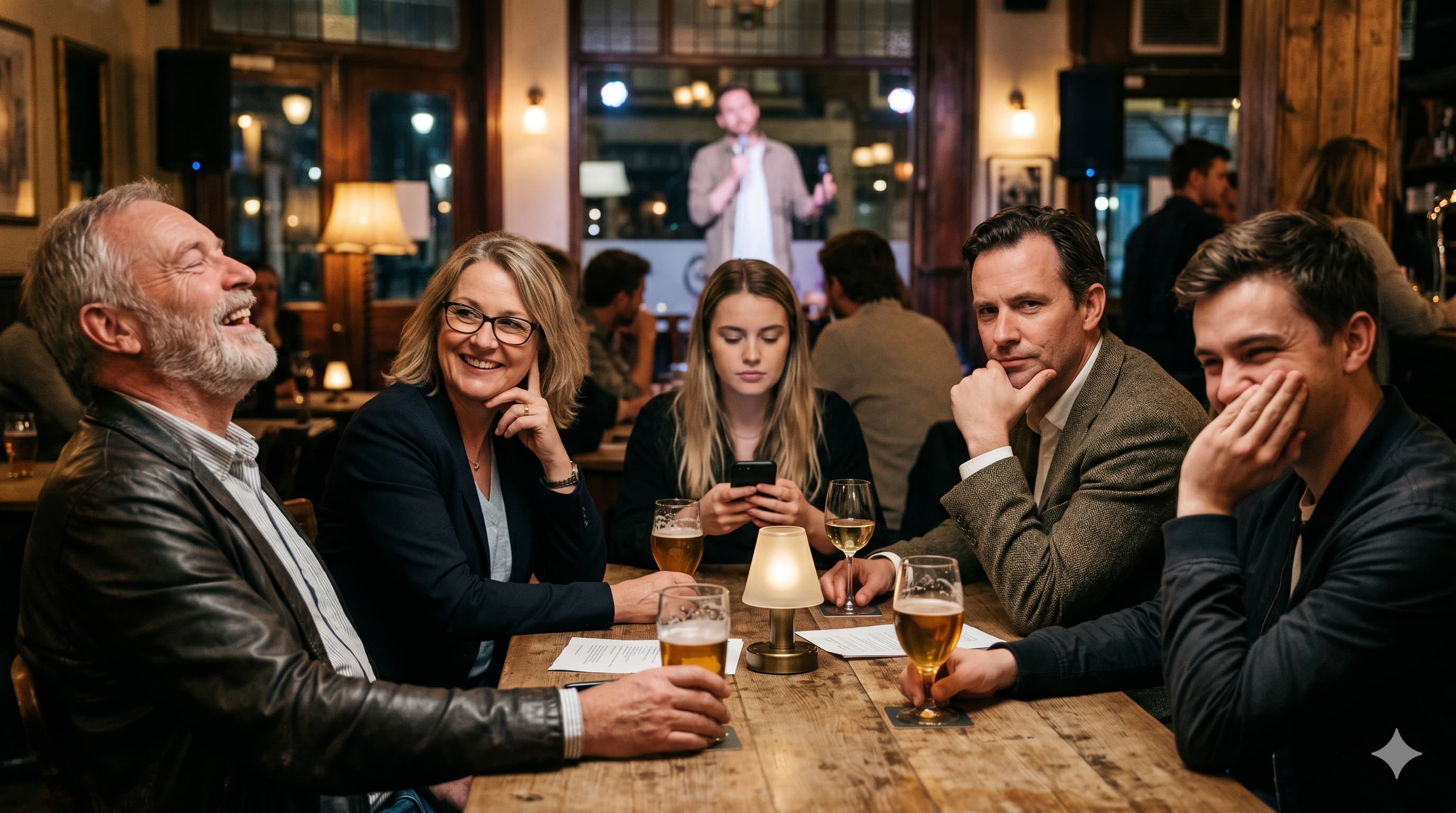
If neurodiverse people carry cognitive advantages, why do environments keep excluding them? Because most organisations optimise for homogeneity — it reduces transaction costs in the short term. Open offices, standardised tests, meetings in round-robin format, dress codes, the requirement to maintain eye contact: all of this is convenient for one neurological configuration.
But the price of homogeneity is high. Research on corporate innovation — including work by London Business School professor Lynda Gratton — shows that the most innovative solutions emerge from cognitively diverse teams, even when such teams work slower and "noisier." By excluding neurodiverse people, organisations lose precisely the types of thinking that neurotypicals cannot replicate.
There's a deeper level too. Neuroscientist Ant Singh-Curran describes this as "cognitive ecology": just as biologically homogeneous ecosystems are more vulnerable to shocks, cognitively homogeneous groups handle unexpected challenges less well. Neurodiversity is systemic resilience. Excluding neurodiverse people isn't just individual injustice — it's collective karma undermining your own potential.
Masking and Its Costs
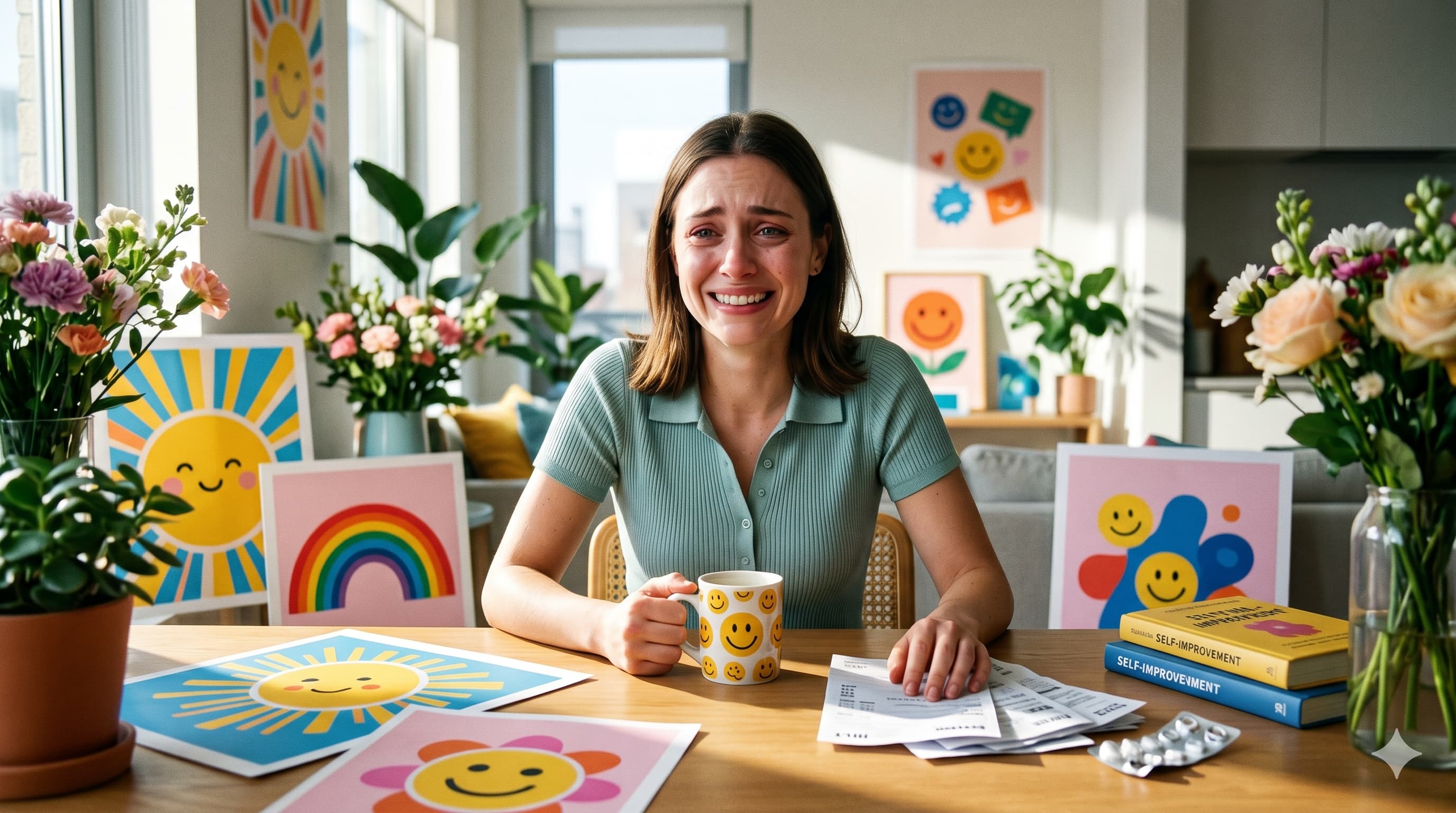
Most neurodiverse people in neurotypical environments engage in masking — consciously suppressing natural behaviour to meet social expectations. An autistic person learns that "you're supposed to make eye contact during conversation" — and does so, even though it requires enormous conscious effort. A person with ADHD suppresses their impulse to move, sitting still through a three-hour meeting. Someone with dyslexia reads their email fifteen times to avoid sending a message with errors.
Masking works — in the sense that it helps someone "fit in." But neurobiologically, it's continuous overloading of executive function. Research shows that actively masking autistic people have significantly higher cortisol levels throughout the day, higher risk of depression, anxiety disorders, and — most tragically — suicidal behaviour. Prolonged forced masking literally destroys mental health.
When we create environments in which a neurodiverse person must mask to survive, we take on part of the responsibility for those consequences. This is the karma of neurodiversity in the most concrete sense.
Inclusive Environments: What They Require and What They Produce
Building neuroinclusive environments isn't merely a "moral obligation." It's specific practices with measurable outcomes. Microsoft, SAP, and other tech companies have launched specialised neurodiverse hiring programmes — and report significant productivity gains in software testing, data analysis, and systems error detection tasks.
What neuroinclusive environments actually require:
- Sensory flexibility: the ability to work in quiet, adjust lighting, use headphones without explanation
- Multiple communication formats: not only verbal meetings but written instructions and asynchronous discussion
- Clarity of expectations: explicit rules rather than implicit norms — neurotypicals benefit from this too
- Evaluation by outcome, not style: looking at what someone produces, not how they look while producing it
- Psychological safety: the ability to say "I need a different format" without fear of stigma
If you want to explore how your own values reflect respect for cognitive diversity, the moral compass on karm.top can serve as a starting point for that self-examination.
Five Ways to Create More Neurodiversity-Friendly Spaces
Change doesn't have to start with corporate programmes. It starts with how you behave right now — at work, at home, with children in your life.
- Don't interpret behaviour through intent: someone who doesn't make eye contact isn't necessarily dishonest or disinterested. Someone who interrupts may simply have a different cognitive rhythm — not disrespect
- Offer options, not a single format: "Would you prefer to discuss verbally or should I write it out?" — that's minimal inclusivity available to anyone
- Ask, don't assume: "What helps you work best?" is a question that removes the necessity for masking
- Separate symptom from intention: when a child "can't sit still," that's neurobiology, not disrespect. How you respond determines whether you create psychological safety or demand masking
- Read about neurodiversity from the inside: not just clinical descriptions, but autobiographical accounts from neurodiverse people. It changes perception fundamentally
Neurodivergence is neither pathology nor superpower. It's a different way of processing the world. The karma we generate around neurodiverse people comes down to one question: are we trying to change the person to fit the environment, or the environment to fit the person? Read also about developing empathy in everyday situations and emotional intelligence development — closely connected territory.
Questions for reflection:
- Is there someone in your life you regularly correct for "strange" behaviour — without ever asking why it's like that?
- Which ways of working or communicating do you treat as "normal" — and where did that standard come from?
- If you couldn't conform to accepted behavioural norms yourself, what kind of environment would you need?
- Can you remember a time when someone adapted to you — and how that felt?
- What specifically are you willing to change in your environment — at home or at work — so that a neurodiverse person would feel safer there?
Subscribe to new content
We publish articles about karma, self-discovery and spiritual practices. No spam — only the good stuff.
We never share your email with third parties. Unsubscribe anytime.