The Karma of Public Shaming: How Cancel Culture Changed the Rules
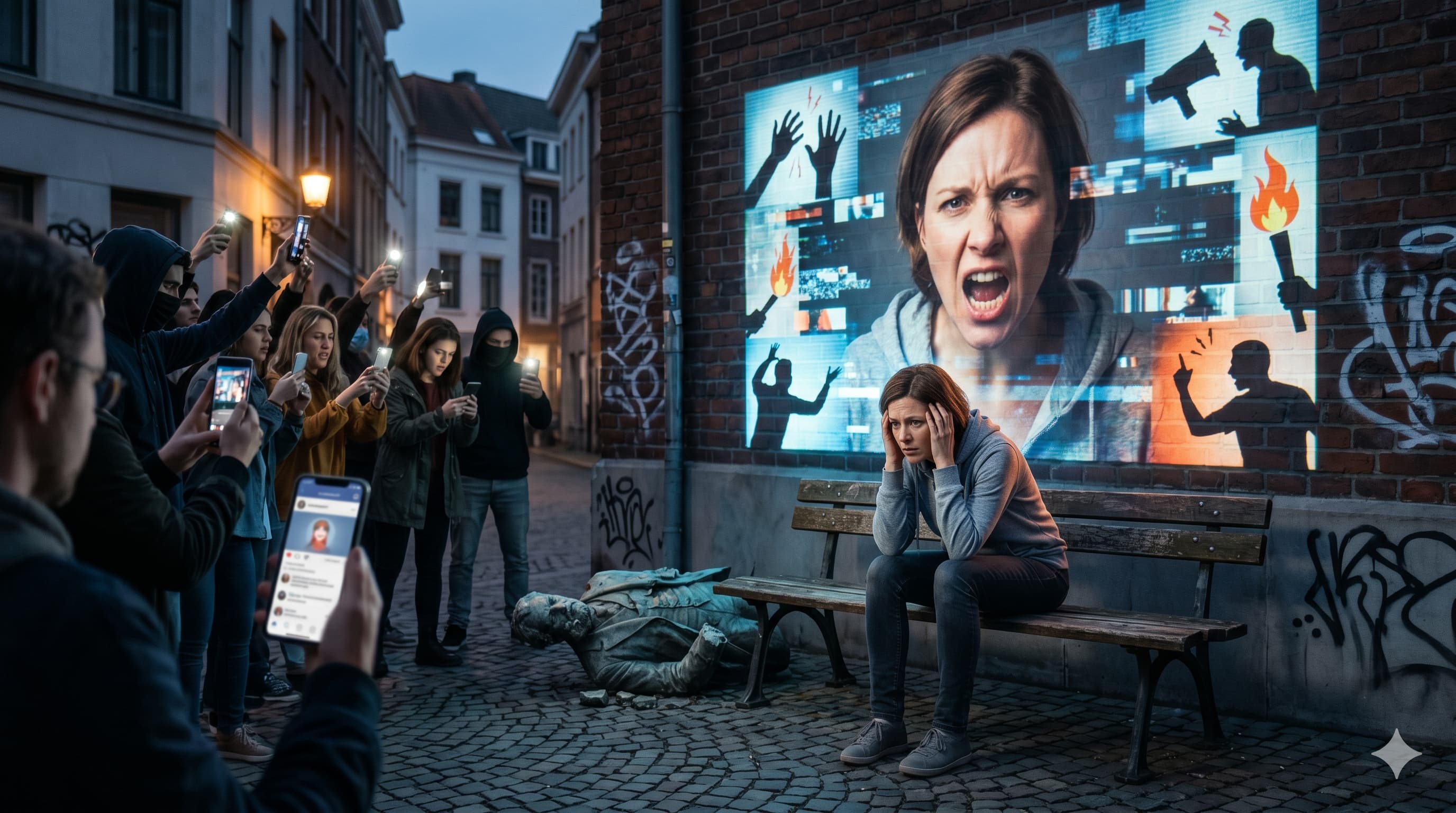
In 2013, PR professional Justine Sacco boarded a plane at Heathrow after typing an ill-advised 11-word joke into Twitter. Twelve hours later, while she was airborne without internet access, those 11 words had become the world's top trending topic. She had already been fired before landing. By the time she touched down, strangers were photographing her at the gate. Sacco's story is not an exception. It's a pattern. One poorly-worded phrase, one old photograph, one fragment stripped of its context — and a person finds themselves under fire from thousands of strangers whose names they'll never know, for an offence no court has examined. Cancel culture posed a question we still haven't resolved: where is the line between legitimate accountability and collective punishment that becomes the very thing it condemns?
Jon Ronson's Research: What Actually Happens to the Publicly Shamed
Journalist Jon Ronson spent years interviewing people who had survived waves of public shaming and turned his findings into So You've Been Publicly Shamed. His conclusions were disturbing. Most people after such episodes don't find redemption or change — they are destroyed. They lose jobs, relationships, mental health. Some change their names and move to different cities. Some stop leaving their homes altogether. Ronson describes this as "symbolic annihilation": the target isn't merely criticised — they are reduced to a single act, stripped of all complexity and context, transformed into a symbol of whatever the crowd needs to condemn. Most striking is that the majority of the people he interviewed weren't monsters. They were ordinary individuals who made one mistake — or who didn't even make the mistake attributed to them, but were misread by an audience they never intended to reach.
The Mechanics of the Mob: Deindividuation, Outrage Contagion, Moral Licensing
Social psychology has long studied what happens to people in crowds. The phenomenon of deindividuation, described by Philip Zimbardo, explains: in conditions of anonymity and group identity, individual accountability dissolves. A person who would never write something cruel alone will do it without hesitation in a group — because "everyone is doing it," "this is justice," "they deserved it." Outrage contagion is another well-documented mechanism. Moral emotions spread through social networks faster and more intensely than any other category of content. Research by Jonas Brady and colleagues found that tweets containing moral condemnation language were reshared 20% more frequently for each additional word in that register. Anger is literally viral. Then there's moral licensing: participating in "righteous" condemnation creates the sense of being on the right side — which in turn permits increasingly harsh behaviour without discomfort. Examine your own ethical positioning with the moral compass tool.
Accountability vs. Punishment: Where Is the Line?
Not everything labelled cancel culture is the same phenomenon. Crucial distinctions are routinely collapsed. Accountability involves real actions with proportionate real consequences: a person who abused power loses that power; a company that concealed harm is required to address it. Public punishment is something different: it's disproportionate, open-ended, frequently applied to people who hold no power, and its goal isn't behaviour change — it's the performance of a group norm. Digital media researcher Whitney Phillips proposes a key test: could the target have changed their behaviour as a result of this process? If not — because they've already been fired, socially destroyed, stripped of any platform — then what's happening isn't accountability. It's a public ritual. And the karmic question: who does that ritual serve, and what does it cost those who participate?
The Karma of the Pile-On: What Participating in Mass Shaming Does to Participants
This is the most uncomfortable part of the conversation. What do acts of collective condemnation do to us? Yale psychologist Molly Crockett studied the phenomenon of "digital moral outrage." Her conclusion: the online environment creates conditions where people experience outrage more frequently but in smaller doses — and this changes the psychology. Brief, repeated bursts of righteous anger create the illusion of moral engagement without real action. We "participate" in fixing the world with a few keystrokes and feel we've done something important, when nothing has actually changed. More disturbing: studies suggest that regular participation in public shaming correlates with reduced empathy. By habituating to symbolic annihilation, we gradually lose the capacity to see the "target" as a person. This is the karmic loop: in seeking to punish cruelty, we cultivate it in ourselves. Read about the psychology of guilt and shame for an important distinction that reframes this dynamic.
Context Collapse: Why Audiences Misread Public Discourse
Media researcher danah boyd introduced the concept of "context collapse" to describe the phenomenon where a statement addressed to one audience reaches another with radically different norms and expectations. A joke comprehensible to close friends becomes an insult to strangers. Irony is read literally. A specialist discussion is lifted into the general arena. Most "cancellation scandals" are built precisely on this mechanism. Someone wrote for one audience; a different audience read it — and the gap between intention and reception becomes an accusation. This doesn't mean context justifies everything. But it does mean that ethical evaluation of public statements requires a genuine effort to reconstruct context — an effort that viral outrage logic makes structurally unnecessary.
Principles for Ethical Online Accountability
Philosopher James Chambers proposes a test worth applying before joining any campaign of public condemnation. The proportionality test: does the proposed consequence match the actual harm? The purpose test: what specifically should change as a result? The reversibility test: if it turns out we were wrong, can the damage be repaired? The self-application test: would you accept this standard applied to you and to people you love? If any of these tests fails — pause. Online ethics in the long run is defined not by who we condemned, but by how we did it. Explore further with the karma of online hatred and public honesty and silence.
Questions for Reflection
- Have you ever participated in publicly condemning someone — and how did you feel afterward?
- Do you know cases where cancellation led to genuine positive change?
- How would you want to be treated if you did something others considered unacceptable?
- Is there a meaningful difference between not supporting someone and actively participating in their destruction?
Subscribe to new content
We publish articles about karma, self-discovery and spiritual practices. No spam — only the good stuff.
We never share your email with third parties. Unsubscribe anytime.