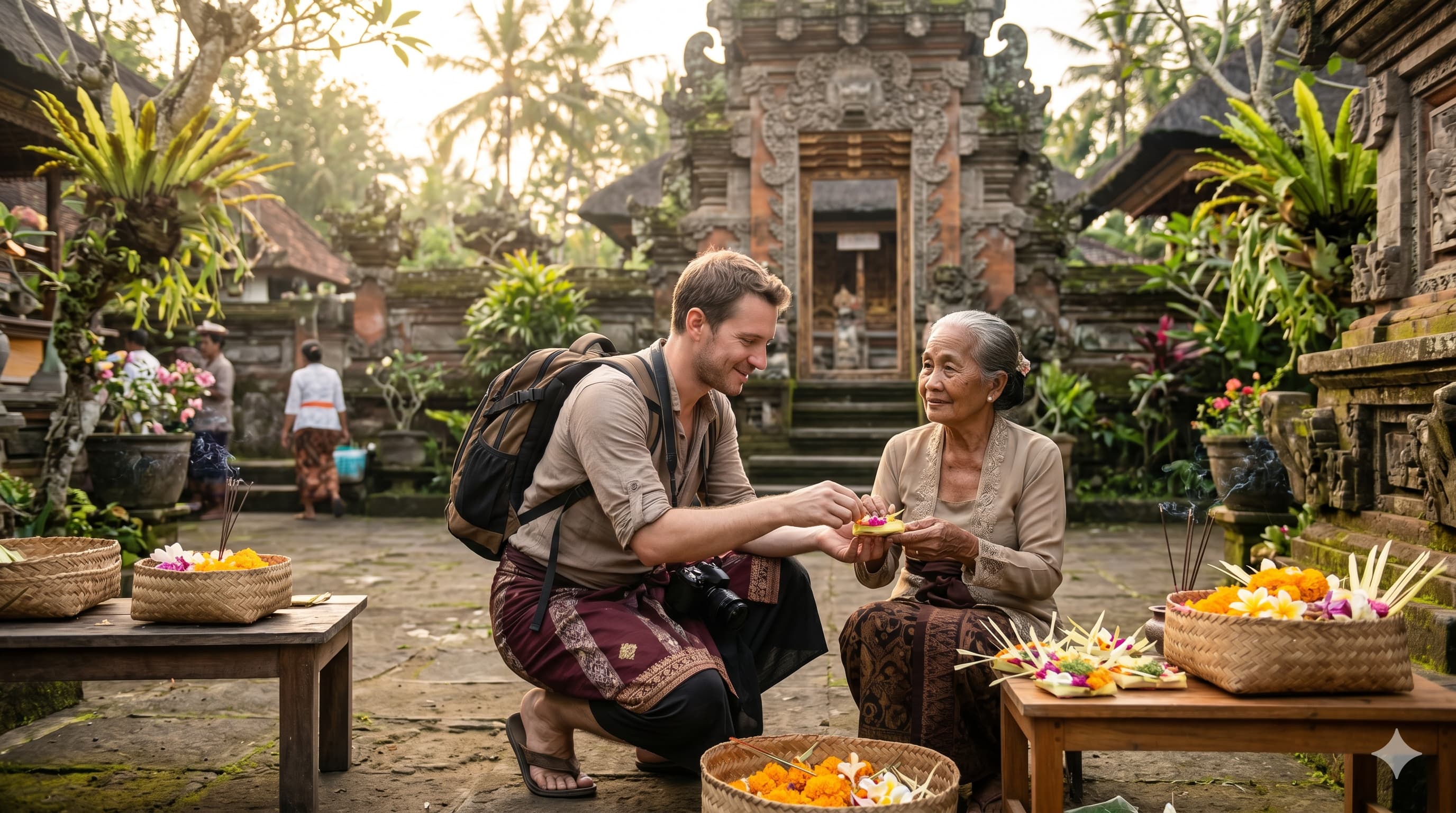
The Karma of Travel: Tourism, Respect, and Responsibility
Guest or Invader? The Karmic Philosophy of Being Somewhere That Isn't Yours
When you cross the border of a foreign country, village, or simply step into a private courtyard, you become a guest. A guest is a special role with special obligations. Almost every culture in the world holds a sacred law of hospitality: the host is obligated to protect the guest, and the guest is obligated to respect the host.
Modern mass tourism often forgets this simple formula. Tourists increasingly behave not as guests but as consumers — having paid for a service and expecting full delivery without any obligations on their part. "I paid for this tour, so I can do what I want" — this mentality seems harmless in any individual case, but on the scale of millions of tourists, it becomes a destructive force.
Venice, Barcelona, Dubrovnik — cities suffocating under tourists. Local residents are forced to leave their homes because rental prices have skyrocketed due to Airbnb. Local markets have become souvenir shops. Streets have become photo backdrops. Living culture gradually dies, replaced by its tourist imitation.
The karmic philosophy of travel begins with a simple question: how does my presence in this place affect it? Am I making this place better — or at least not worse — by being here?
Cultural Imperialism in Tourism: The Invisible Violations
Most karmic violations in tourism are committed not out of malice, but ignorance. This is precisely why they're so dangerous — they're harder to notice and correct.
Photography without permission is a classic example. Tourists in Morocco, India, and Ethiopia regularly photograph local residents as exotic subjects without asking consent. A person becomes an object of aesthetic consumption. Their face, body, clothing, and daily life become "content" for Instagram without their knowledge. This is a violation of dignity, even if no law prohibits it.
Bargaining at local markets is another nuanced moment. For a tourist from a wealthy country, a two-dollar discount is a pleasant little victory. For a vendor living on a few dollars a day, it can be a significant difference. Bargaining is part of many cultures — it's normal and even expected. But aggressive bargaining that drives a seller to minimum margin for the sake of "winning" is karmically questionable.
Sacred sites and religious objects regularly fall victim to tourist tactlessness. Temples in shorts, monasteries with loud conversation, altars from which tourists take "souvenirs." Not knowing local rules is no excuse. Before visiting a religious site, five minutes of research into basic etiquette is sufficient.
These themes are directly connected to questions of ecology and karma — how our individual actions add up to collective consequences.
The Environmental Footprint of Travel: Flights, Hotels, Waste
The ecological karma of travel isn't an abstract concept. It's measurable numbers.
A round-trip transatlantic flight produces approximately 1.7 tons of CO₂ per person — roughly equal to what an average resident of India consumes over three months. In an era of climate crisis, air travel has become one of the most karmically loaded consumer choices.
This doesn't mean you can't fly. But it does mean the conscious traveler doesn't ignore this fact. Carbon offset is an imperfect but real tool. Choosing trains over planes where possible. Fewer but longer trips instead of constant "cheap flights."
Hotels are a separate story. Luxury resorts in developing countries often consume water from the same sources that are catastrophically scarce for local populations. Air conditioning of enormous spaces in the tropics. Daily linen changes at tourist request. All of these are karmic footprints that add up to real environmental damage.
Plastic waste is an especially acute problem in tourist regions. Seas of bottles on Balinese beaches, mountains of packaging at the foot of the Himalayas — largely the result of tourists not managing their waste. The simple principle of "carry out more than you brought in" is the basic minimum of traveler karmic responsibility.
The connection between personal choices and global consequences is detailed in the article on climate and personal responsibility.
Volunteer Tourism: Doing Good or Self-Deception?
"Voluntourism" — travel with elements of volunteer activity — has become a vast industry. Building schools in Africa, caring for orphans in Asia, saving turtles in Costa Rica — sounds perfect from a karmic standpoint. But reality is often far more complex.
Research shows that many volunteer programs benefit the volunteers themselves (good feelings, resume line, photos with children) more than local communities. Schools built by volunteers that collapse within three months because the volunteers didn't know how to build. Orphanages where a constant stream of new "volunteers" creates unhealthy attachment patterns in children's development.
The phenomenon of "poverty porn" — creating content about suffering people for traffic and likes — is a particularly painful karmic problem in voluntourism. When a traveler photographs a dying child for Instagram, the line between compassion and exploitation becomes very thin.
This doesn't mean voluntourism is always bad. It means good intentions are insufficient. Before going to "do good," honest questions deserve honest answers: Does this community actually need my specific help — or do I need to feel like I'm helping? Do I have skills that are needed here? Will I be taking work from a local specialist?
"Authentic Experience" vs. the Exploitation of Local Traditions
The demand for "authenticity" in tourism has created a paradox: the more tourists seek the "real life" of local residents, the less real it becomes. Culture under the tourist camera inevitably transforms — first into a show for tourists, then into a caricature of itself.
Ethnic village-museums in Thailand, where local residents are paid to "demonstrate" their lifestyle to tourists. Traditional dance shows that never existed in that format — created specifically for visitors. Rituals available for observation at a price, extracted from their spiritual context.
What makes an experience genuinely authentic? Usually, accident and reciprocity: a chance conversation with a local, an invitation to a family celebration, a shared meal without tourist intermediaries. These moments cannot be purchased at a travel agency — but they're the ones that leave a genuine mark.
Shopping on the Road: Support Locals or Buy a Made-in-China Souvenir?
Souvenirs are a small but significant karmic choice in every trip. That refrigerator magnet you buy at a market in Egypt or India is, with high probability, made in China and has no connection to local culture. Your money goes to a global manufacturer, not a local artisan.
The alternative requires a bit more effort: find genuine local craftspeople, buy directly from them, be willing to pay a fair price for real handmade work. This choice supports a living craft tradition, provides real income to a real person, and brings home an object with an actual story.
Food is another dimension. Eating at local family restaurants, farmers markets, from street vendors — this directly supports the local economy karmically. Eating at international chains that export profits from the country is choosing global corporate capital at the expense of local communities.
The interconnection of consumer choices and ethics is explored in depth in the article on ethics of consumption.
How to Travel in a Way That Leaves Places Better Than You Found Them
The practical principles of karmically responsible travel don't require sacrificing comfort or the joy of discovery. They require mindfulness — the habit of asking yourself the right questions.
Before the trip:
- Study basic etiquette and cultural norms of the destination — an hour of research is sufficient
- Learn a few words in the local language — even "thank you" and "please" transform interaction quality
- Consider the environmental footprint of your route — are there alternatives to flying?
- Research the real impact of the organization you're traveling with on the local community
During the trip:
- Ask permission before photographing people
- Spend money at local businesses rather than international chains
- Follow local rules in religious and cultural spaces
- Don't take natural "souvenirs" — stones, shells, plants
- Leave less waste than you found
After the trip:
- Tell friends honestly not just about beautiful places but about real problems you witnessed
- Support local organizations or projects that inspired you
- A TripAdvisor review for a small local business can mean more than you think
Real travel is exchange, not consumption. You bring home impressions, knowledge, an expanded perspective. You leave behind money, respect, possibly friendship. When this exchange is honest, it enriches both sides. When one side only takes — sooner or later, the source runs dry.
Discover What Kind of Traveler You Are
Your values in travel are a reflection of your values in life. Take the karma test to see how your everyday choices add up to a complete picture — and where there's space to grow.
Subscribe to new content
We publish articles about karma, self-discovery and spiritual practices. No spam — only the good stuff.
We never share your email with third parties. Unsubscribe anytime.