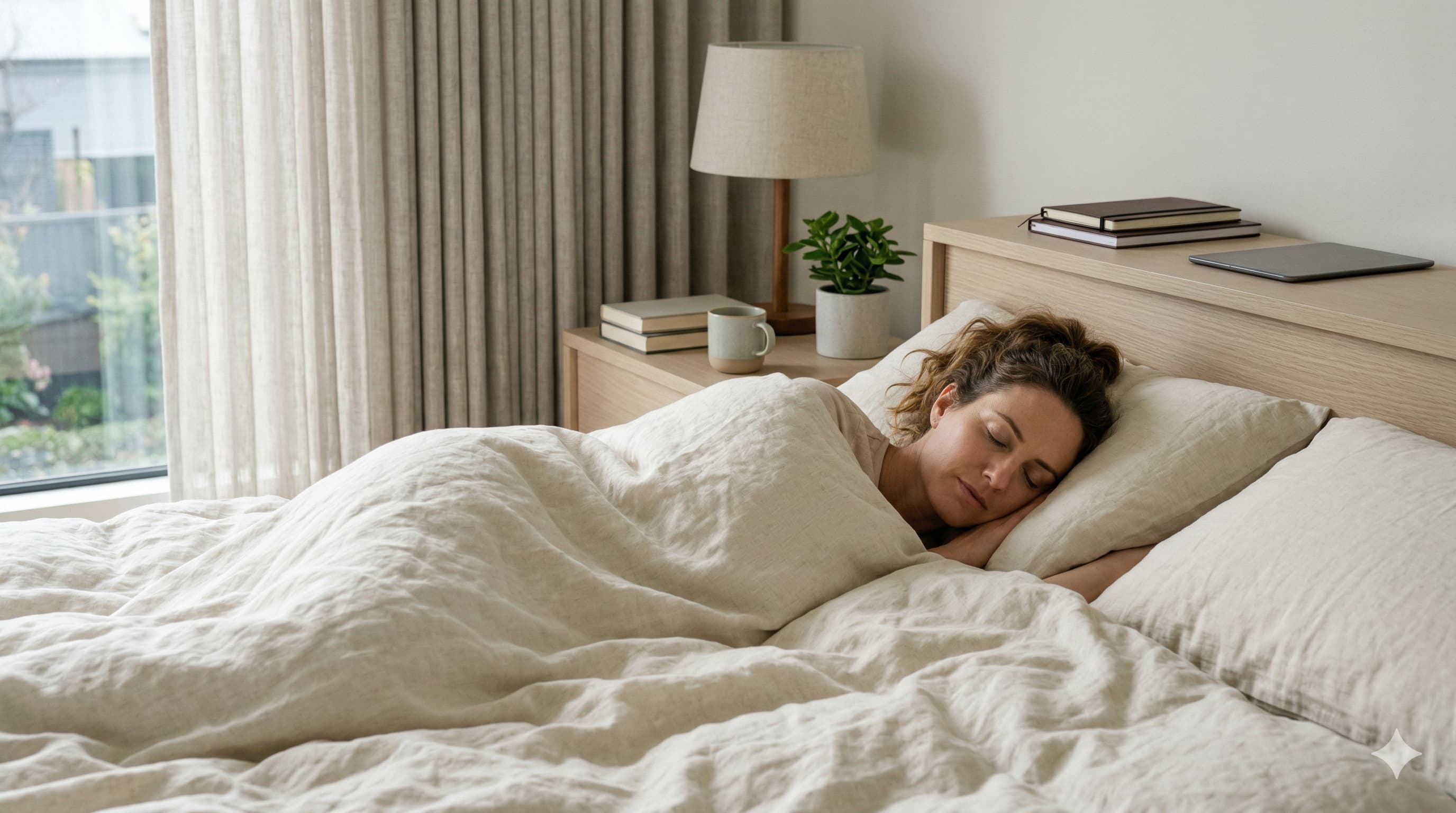
Sleep: Why Rest Is an Ethical Obligation to Yourself
Sleep: Why Rest Is an Ethical Obligation to Yourself
We live in an era that glorifies productivity and punishes rest. «I sleep 4 hours and get everything done» — this is something to be proud of. But the neurobiology of sleep delivers an unflattering verdict: chronic sleep deprivation destroys the brain, body, and character. And this has a deep karmic dimension: how we treat our own body reflects how we treat the world.
Professor Matthew Walker of the University of California, Berkeley, author of «Why We Sleep», calls sleep «the single most effective thing we can do to reset our brain and body health each day». His research and decades of NIH (National Institutes of Health) work paint an unambiguous picture: sleep is not optional — it is a biological necessity.
The Science of Sleep: What Happens While We Sleep
Sleep is often perceived as a passive state — the body lies still, the brain «turns off». In reality, during sleep, enormous work takes place without which normal functioning is impossible.
4 Sleep Stages and Their Roles
Sleep consists of cycles of about 90 minutes each. Each cycle includes four stages. Stage 1 (N1) — the transition from wakefulness to sleep, lasts a few minutes. Stage 2 (N2) — light sleep, body temperature drops, heart rate slows. Stage 3 (N3) — deep slow-wave sleep, the most restorative. REM phase (Rapid Eye Movement) — active dreaming and emotional processing.
The proportion of stages changes throughout the night: deep sleep dominates in the first half, REM in the second. This is why cutting sleep to 6 hours disproportionately cuts REM sleep — with serious consequences.
Deep Sleep: Memory Consolidation and Immune Protection
During deep sleep (N3), several critically important processes occur. Memory consolidation: the brain «transfers» daily impressions from short-term to long-term memory. This is why studying before sleep is more effective than late at night without subsequent rest. Glymphatic clearance: the recently discovered system «flushes» toxic metabolites, including beta-amyloid — a protein whose accumulation is linked to Alzheimer's disease. Immune restoration: NK cells (natural killer cells) and other immune system components actively regenerate during deep sleep.
REM Sleep: Emotional Processing of Experience
The REM phase is not just dream time. According to UC Berkeley research, during REM sleep, the brain «processes» emotionally charged memories, reducing their emotional intensity. This explains why «sleeping on it» works: after sleep, acute feelings genuinely seem less acute. People with depression often have disrupted REM sleep — this is no coincidence.
What Happens with Sleep Deprivation
The consequences of sleep deprivation go far beyond feeling tired. They affect every body system.
Cognitive Impairment After Just One Night
One night of poor sleep reduces cognitive function to a level comparable to mild alcohol intoxication. Attention, working memory, reaction time, and decision-making ability all deteriorate. Critically important: people with chronic sleep deprivation often don't realize the extent of their cognitive impairment — the subjective sense of «I'm functioning fine» diverges from objective measures.
Hormonal Disruption and Metabolism
Lack of sleep disrupts the balance of key hormones. Cortisol (stress hormone) rises. Ghrelin (hunger hormone) increases, leptin (satiety hormone) falls — a direct path to overeating. Testosterone decreases in men. Insulin resistance increases — raising the risk of type 2 diabetes.
Mental Health and Depression Risk
The connection between sleep and mental health is bidirectional: poor sleep worsens mental state, and mental health problems disrupt sleep. But importantly, sleep disturbances often precede depression and anxiety disorders, not follow them. According to Harvard Medical School, the risk of developing depression in people with chronic insomnia is 10 times higher than in those who sleep normally.
The Productivity Cult vs. Biology
«Sleep is for the weak», «I'll sleep when I'm dead», «successful people sleep little» — these myths are scientifically disproven but continue to live in corporate culture. The paradox is that by depriving ourselves of sleep for «productivity», we make our thinking less sharp, our decisions more impulsive, and our relationships more conflictual. In other words, we work more but perform worse.
Review your daily health care practices through the lens of karmic daily habits — sleep is central to them.
The Karma of Chronic Sleep Deprivation
From a karma perspective, sleep is not just a physiological need. It is a form of respect for yourself and for others. A person who chronically under-sleeps becomes less patient, less empathetic, more prone to conflict and erroneous decisions. This affects not only themselves but everyone they interact with. Learn more about the connection between health and karma in our health karma article.
8 Science-Based Sleep Hygiene Rules
These are not tips of the «go to bed earlier» variety. Each rule is backed by research.
1. Consistent Bedtime and Wake Time
Your circadian rhythm — your body's internal clock — functions best with a consistent schedule. Even on weekends. Trying to «catch up» on Saturday disrupts your rhythm and makes Monday even harder.
2. Bedroom Temperature of 60–65°F (16–18°C)
For sleep onset, your body temperature needs to drop about 1°C. A cool bedroom facilitates this process. Research shows most people sleep better at 60–65°F than at a typical room temperature of 72–73°F.
3. No Screens 1 Hour Before Bed
The blue light from screens suppresses melatonin production. But it's not only about light: stimulating content (news, social media, games) activates the nervous system. Replace the screen with a book, meditation, or quiet conversation.
4. Caffeine Only Before 2 PM
Caffeine's half-life is about 6 hours. Coffee at 3 PM means half its dose is still in your blood at 9 PM. Many people who complain of insomnia don't realize how much late-day caffeine affects their sleep.
5. A Relaxing Evening Ritual
Create a «buffer» between your active day and sleep: 30–60 minutes of relaxing activity. A warm bath, light reading, breathing exercises. This signals your nervous system to shift into rest mode.
6. Physical Activity (But Not in the Evening)
Regular exercise significantly improves sleep quality — but should finish at least 3 hours before bed. An evening workout raises body temperature and cortisol levels, making it harder to fall asleep.
7. Darkness and Quiet
Any light in the bedroom — even from a charger — can disrupt melatonin production. Blackout curtains or a sleep mask are simple and effective solutions. Noise, even soft noise, also affects sleep depth: earplugs or white noise can help.
8. Write Down Worries Before Bed
One of the main causes of insomnia is «thought spiraling». A Baylor University (2018) study showed that 5 minutes of writing tomorrow's to-do list before bed helps «offload» worries from working memory and speeds up sleep onset.
Your Health Care
Sleep is one of the foundational acts through which you express respect for your body and for those around you. Take the test at karm.top to explore how your daily health habits add up to a karmic picture. Mindfulness in small daily decisions — that is true karma.
FAQ
How many hours of sleep does an adult need? According to NIH and the National Sleep Foundation, most adults (ages 18–64) need 7–9 hours of sleep per night. Adults over 65 need 7–8 hours. The need for less than 6 hours without negative consequences occurs in fewer than 3% of the population and is linked to rare genetic mutations.
Can you «catch up» on missed sleep on weekends? Partially — yes. Short-term «sleep debt» can be compensated. But chronic sleep deprivation (weeks and months) cannot be compensated by a few long weekends. Some cognitive impairments persist even after recovery sleep. Prevention is better than treatment.
What to do about chronic insomnia? Cognitive-Behavioral Therapy for Insomnia (CBT-I) is recognized as the gold standard of treatment. It is more effective than sleep medications in the long term and has no side effects. Consult a sleep specialist or therapist specializing in sleep disorders.
Subscribe to new content
We publish articles about karma, self-discovery and spiritual practices. No spam — only the good stuff.
We never share your email with third parties. Unsubscribe anytime.