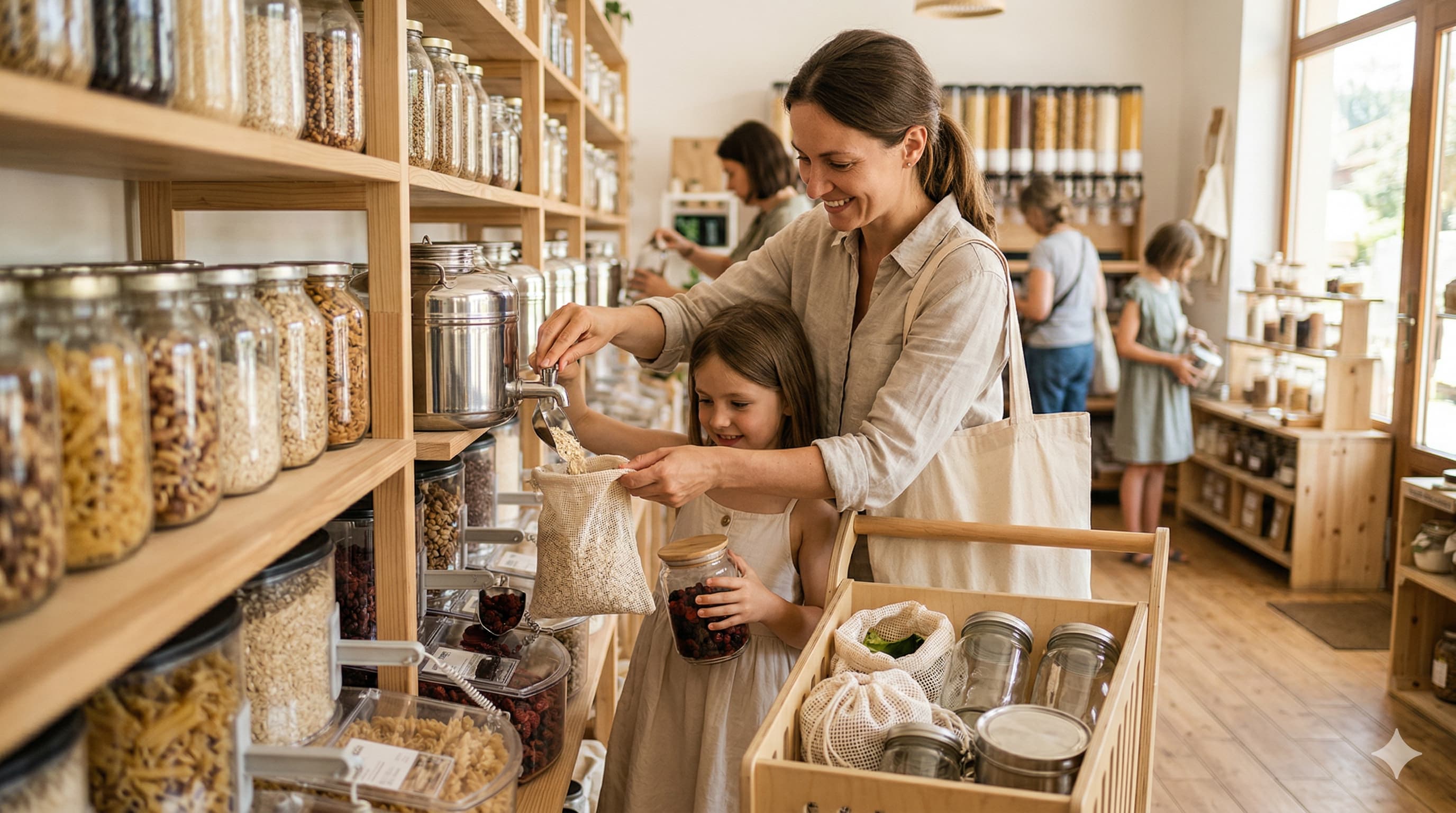
Zero Waste: How Zero Waste Becomes a Way of Life
Zero Waste: How Zero Waste Becomes a Way of Life
«Zero waste» literally means producing no trash. But it's not about living in asceticism or endlessly counting garbage in a jar. Zero waste is a philosophy of conscious consumption, based on a simple principle: before throwing something away, ask yourself — can this be avoided?
The creator of the modern zero waste concept is Bea Johnson — an American living in France who has lived by zero waste principles since 2008 and documented her experience in «Zero Waste Home» (2013). Her family of four produces less than 1 liter of trash per year. This isn't a Guinness record stunt — it's a demonstration of what's possible with a systematic approach.
5R: The Five Principles of Zero Waste
The zero waste philosophy is built on five principles that must be applied in this exact order — from the most impactful to the least priority. Trying to «recycle everything» without the preceding steps is like treating symptoms while ignoring the cause.
Refuse — the First and Most Important
The most powerful zero waste tool is simply not taking what you don't need. Free bags at the checkout, promotional flyers, disposable utensils at cafes, useless conference swag. Every refusal is something that won't end up in a landfill. Refuse requires only one skill: saying «no, thank you».
Reduce
Buy less and better. This doesn't mean living in poverty — it means approaching every purchase consciously. One quality sweater instead of five cheap ones. A week's groceries instead of daily impulse purchases. Reduce is about quality over quantity.
Reuse
Use what you already have as long and as many times as possible. Reusable bags instead of plastic ones. Glass jars instead of disposable containers. Repaired shoes instead of new ones. Reuse also includes buying secondhand — thrift stores, rentals, swaps.
Recycle
Recycling is an important tool, but it ranks only fourth in the 5R hierarchy. Why? Because recycling requires energy, creates emissions, and isn't always possible (many plastics are actually incinerated, not recycled). Recycling is the best option for unavoidable waste, not a solution to overconsumption.
Rot (Compost)
Organic waste makes up roughly 40% of what we throw away. Food waste in landfills doesn't decompose normally (due to lack of oxygen) — it produces methane, a potent greenhouse gas. Composting at home, at a community garden, or through city programs returns organic matter to the soil.
Zero Waste Myths
Zero waste is surrounded by myths that deter people before they even try. Let's address the most common ones.
«It's Expensive» — Debunked
At first glance, reusable items look more expensive than disposables. But when calculated per use, the picture changes. A reusable coffee cup pays for itself after 30 uses. Reusable bags — after 3–5 shopping trips. Cooking at home from unprocessed ingredients costs less than packaged ready-made food. In the long run, a zero waste lifestyle is generally cheaper than a consumer one.
«It Takes Too Much Time» — Debunked
Zero waste requires habit restructuring, but doesn't require extra hours. Buying unpackaged goods, cooking at home, avoiding impulse purchases — all of this feels laborious at first but becomes automatic within months. Moreover, mindful purchases often save time by eliminating pointless decisions.
«One Person Isn't Enough» — Debunked
This is the most common argument for inaction. The US EPA estimates the average American produces about 4.9 pounds (2.2 kg) of trash per day. Multiply by 330 million people. Now imagine each person reduced this by 50%. Individual choices at societal scale create enormous effects.
Consumer Karma: What Your Purchases Say About You
From a karma perspective, every purchase is a vote. Every time you buy something, you're voting for the production behind that product. Buying from companies with cruel practices — you support those practices. Buying eco-friendly alternatives — you create market demand for them. Read more on the ethics of consumption in our articles on ecology and karma and ethics of consumption.
Waste Statistics: Why This Matters
EPA Waste Volume Data
According to the US EPA, Americans generated 292.4 million tons of municipal solid waste in 2018 — about 4.9 pounds (2.2 kg) per person per day. Of this, only about 32% was recycled. The rest went to landfills or incineration. Globally, the World Bank estimates the world will produce 3.4 billion tons of waste annually by 2050.
Plastic in the Oceans: The Scale of the Problem
According to Science journal researchers (2015), 8 million tons of plastic enter the world's oceans annually. By 2050, there will be more plastic than fish by weight in the oceans — if current trends continue. Plastic doesn't decompose — it only breaks into microplastic, which has already been found in human blood, breast milk, and Arctic ice.
10 First Steps Toward Eco-Friendly Living
- Refuse single-use bags. Make carrying a reusable bag a habit.
- Buy a reusable water bottle. Eliminates hundreds of plastic bottles per year.
- Use a reusable coffee cup. Or drink coffee at cafes from their own dishes.
- Switch to bar soap. No plastic packaging, lasts longer than liquid.
- Refuse disposable utensils for takeout.
- Start composting food scraps.
- Buy unpackaged products. At farmers markets or bulk stores.
- Repair items instead of replacing them.
- Explore secondhand.
- Learn what can be recycled in your area.
Your Ecological Karma
Zero waste is not perfectionism. It's not about living «clean» — it's about striving to live consciously. Every small step matters — not only for the planet, but for your sense of integrity: acting in alignment with what you believe matters. Take the test at karm.top — the «ecology» category will show how your consumer choices add up to a karmic picture.
FAQ
Where should a zero waste beginner start? Start with one change — a reusable bag or water bottle. Get comfortable with it for a few weeks, then add the next. Gradual progress matters more than speed.
What about things that are hard to replace? Zero waste is not a 100% result — it's a direction of travel. Use what you already have until it wears out. Then, when replacing, choose a more sustainable alternative.
How do I introduce zero waste to my family? Don't try to convince with arguments. Lead by example. Small changes that don't create inconvenience for others (reusable bags, declining unnecessary packaging) are usually accepted without resistance.
Subscribe to new content
We publish articles about karma, self-discovery and spiritual practices. No spam — only the good stuff.
We never share your email with third parties. Unsubscribe anytime.