Biohacking: The Ethics of Body Optimization Before and Beyond the Limit
Biohacking: The Ethics of Body Optimization Before and Beyond the Limit
Dave Asprey, one of the founders of the biohacking movement, takes roughly 100 pills and supplements daily, sleeps on a temperature-regulated mattress, uses an infrared sauna and oxygen therapy — and publicly declares his goal of living to 180. He has spent millions of dollars optimizing his body.
Biohacking — using science, technology, and self-experimentation to improve physical and cognitive function — has become one of the fastest-growing health movements. But behind the interest in the topic lies an important question: what of this actually works? Who has access to these technologies? And where does self-care end and the pursuit of an «enhanced» version of the human being begin?
What Is Biohacking: From Sleep to Neural Interfaces
Biohacking spans a wide range of practices — from accessible to everyone to bordering on science fiction.
Level 1: Lifestyle optimization. Sleep, nutrition, exercise, stress management, meditation. These are the most accessible and most scientifically supported biohacking practices. Read more about the ethics of caring for your body through movement in our article on physical activity as an ethical choice.
Level 2: Supplements and nootropics. Vitamins, minerals, adaptogens (ashwagandha, rhodiola), nootropics. The evidence base here is significantly weaker and more heterogeneous.
Level 3: Technology devices. Continuous glucose monitors, sleep trackers, transcranial stimulation devices, PEMF therapy. Some have scientific backing; others are primarily marketing claims.
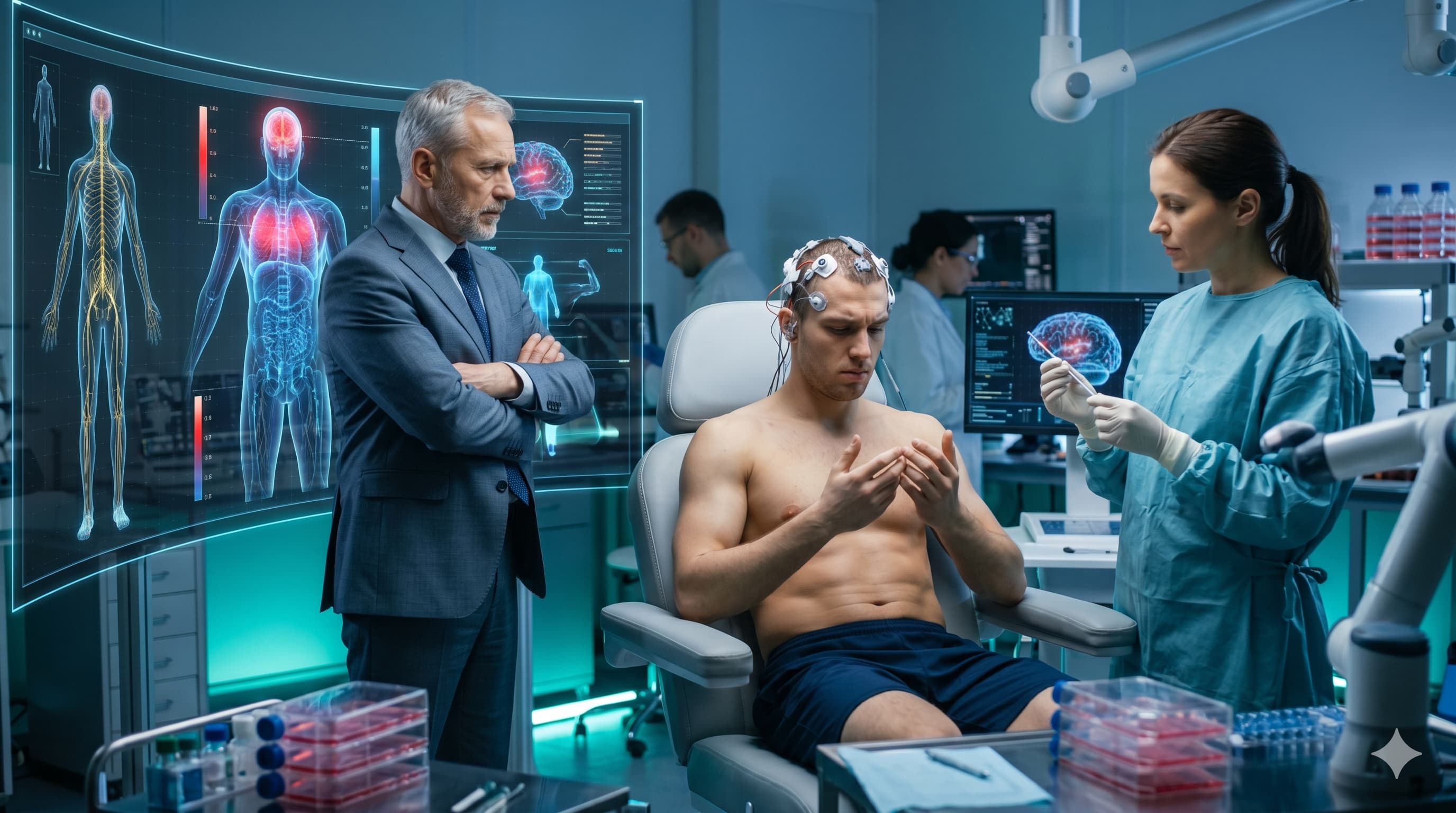
Level 4: Medical interventions. Stem cell therapy, young plasma transfusion, gene therapy, neural interfaces (such as Elon Musk's Neuralink). This is the domain where ethical questions become most acute.
Science vs. Hype: What Actually Works
The biohacking industry is a multi-billion-dollar market where science and marketing are blended to the point of indistinguishability. NHS and Mayo Clinic give reasonably clear guidance.
What works (with strong evidence): Quality sleep of 7–9 hours — perhaps the most powerful «biohacking intervention» available to everyone for free. Regular physical activity (150 minutes of moderate intensity per week per WHO guidelines). Predominantly whole-food, plant-forward nutrition. Chronic stress management through meditation or other practices. Social connections (the Harvard Study of Adult Development showed: this is the strongest predictor of health and longevity).
What's questionable (weak or contradictory evidence): Most nootropic supplements (except caffeine and specific vitamins when deficient). Many popular biohacking supplements — rapamycin, metformin as «anti-aging» — have serious side effects and are recommended only for specific medical conditions. Young plasma transfusion — the FDA issued a warning about unproven efficacy and potential risks.
What's plainly dangerous: Self-medicating with compounds not through clinical trials. Extreme diets without medical supervision. Chip implantation without qualified medical assistance.
The Karma of Enhancement: Who Bears the Cost of Progress
Biohacking raises a deep question of fairness. Stem cell therapy costs tens of thousands of dollars. Neuralink neural interface — potentially hundreds of thousands. Even Asprey's basic biohacking rituals are inaccessible to most people on the planet.
This means: body enhancement technologies risk creating biological inequality that entrenches and amplifies social inequality. Those who already live better will live even better — and longer. This is not a neutral technology.
Philosopher Nick Bostrom, one of the chief theorists of transhumanism, argues: humanity has a moral obligation to develop technologies that improve human nature — including longevity, cognitive enhancement, emotional intelligence. But even Bostrom acknowledges: if these technologies are accessible only to elites, they can become instruments not of progress, but of domination. Read more about the connection between technology and ethics in our article on AI ethics.
Transhumanism and the Question of the «Normal» Body
Biohacking as a movement grows from the broader philosophy of transhumanism — the belief that humanity should and can overcome biological limitations through technology. This raises several fundamental questions.
What does «enhancement» mean? Enhancement relative to what? When we speak of «cognitive enhancement», we assume a certain conception of the optimal human. But this conception is not neutral — it reflects the values of a predominantly Western, educated, high-performance culture.
Who decides what's normal? The disability rights movement has long raised the question: is «enhancing» a person with a disability helping them — or denying their identity? A cochlear implant for a deaf child — medical assistance or an attempt to «normalize» something that doesn't need normalization?
Death as a problem or part of life? Aubrey de Grey of SENS Research Foundation and other «longevists» treat aging as a disease to be defeated. Philosophers of the memento mori tradition counter: accepting mortality is not defeat, but a source of meaning and ethics. Awareness of life's finitude compels us to value it.
Your Health — Your Choice
Biohacking at its best is the application of science to daily life for genuine health and quality-of-life improvement. Sleep, nutrition, movement, stress — this is what science has long known and what is accessible to most people without thousand-dollar supplements. At its worst, it is a hype industry that sells hope to wealthy people who already live well. Take the test at karm.top in the «health» category — and see how well your self-care aligns with your real values. About karma of health as a system of daily choices — read our article on karma of health.
Frequently Asked Questions
Which supplements actually work? With strong evidence: vitamin D (when deficient, which is common), omega-3 fatty acids, magnesium. Caffeine is the most studied and effective nootropic. Everything else ranges from «possibly works» to «no evidence».
Is biohacking dangerous? Basic practices (optimizing sleep, nutrition, movement) are safe. Self-medicating with experimental compounds without medical supervision — potentially dangerous. Medical interventions outside clinical trials — a risk that is rarely justified.
Is it ethical to pursue «eternal life»? An open question. On one hand, wanting to live longer and healthier is natural. On the other — on a planet with limited resources, indefinite extension of the lives of the already-living raises questions of fairness for those who will be born afterward.
Subscribe to new content
We publish articles about karma, self-discovery and spiritual practices. No spam — only the good stuff.
We never share your email with third parties. Unsubscribe anytime.