The Karma of Illness: What the Body Is Trying to Tell Us
The karma of illness is one of the most delicate yet profound topics in the philosophy of human experience. When we fall ill, the first response is often «why me?» — an instinctive search for meaning, a way to make pain comprehensible. But the karma of illness is not about punishment. It is about the connection between how we live, what we ignore, what we run from — and how that shows up in the physical body.
Illness in Different Spiritual Traditions
Virtually every spiritual tradition in the world holds a concept linking inner state to physical health. The differences lie in how that connection is interpreted.
In Ayurveda — India's traditional medicine — illness is understood as an imbalance of the three doshas (vata, pitta, kapha), arising from lifestyle, unsuitable diet, and also mental states: anger, fear, grief. Health is harmony; illness is a deviation from it. Treatment involves not only herbs and diet but also meditation, behavioral correction, and relationship repair.
Traditional Chinese medicine views the body as a system of energy flows (qi). Blocked or imbalanced qi manifests in specific organs depending on the type of emotion: sadness connects to the lungs, anger to the liver, fear to the kidneys, anxiety to the heart. This is not metaphor — it is a working diagnostic map thousands of years old.
In Buddhism, illness is suffering (dukkha), inseparable from human existence. But our relationship to it is a choice. We can suffer twice: from pain plus from resistance to pain. Or we can observe, accept, and learn.
The Christian tradition holds a dual view: illness may follow sin or test faith, but it can also be a path to humility and spiritual growth. Job in the Bible suffers not for sins but as a test of faith. Illness here is not a verdict — it is an opportunity.
Psychosomatics: The Real Mind-Body Connection
Psychosomatics and karma are two fields that modern science increasingly finds adjacent. Psychosomatic medicine is not simply «illness caused by stress» in a dismissive sense. It is a serious scientific discipline studying how mental states become physiological changes.
The key discovery of recent decades is the connection between chronic stress and the immune system. Research by James Pennebaker at the University of Texas showed that people experiencing chronically suppressed emotions — especially grief, guilt, and anger — fall ill with infectious diseases more often and recover more slowly. The mechanism: cortisol, the stress hormone, when chronically elevated suppresses the activity of NK cells (natural killers), which are first-line defenders against cancer cells and viruses.
More radical findings came from Gabor Maté, a Canadian physician and researcher. Studying patients with autoimmune diseases, cancer, and chronic pain, he found a striking pattern: many of them shared extreme difficulty saying no to others, suppression of their own anger, and consistent prioritization of others' needs over their own. His conclusion: «Disease is not the body's failure. It is the body's attempt to survive in conditions that threaten its integrity.»
Specific connections studied by psychosomatics: chronic back pain is often linked to carrying an «unbearable burden» of responsibility; throat and voice problems connect to suppressed desires to speak truth; skin conditions relate to violated boundaries; cardiovascular disease correlates with chronic anger or the experience of heartbreak. Take the karma test to identify which patterns may be affecting your wellbeing.
The Karma of Self-Denial: How We Get Sick by Ignoring Ourselves
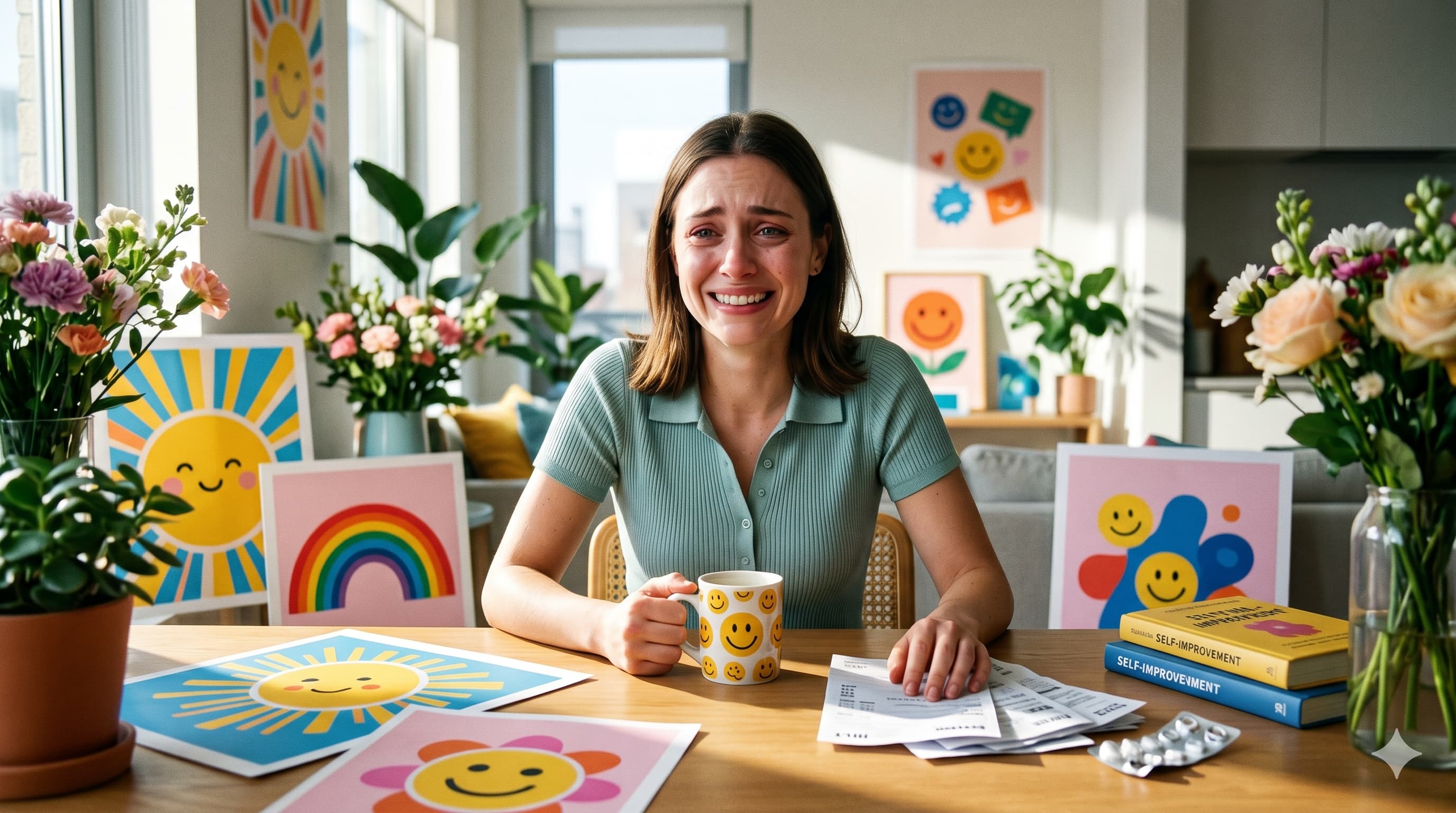
The karma of self-denial is a specific pattern that appears with surprising frequency. It looks like this: a person spends years ignoring signals of fatigue, skipping vacations, continuing to work through pain, delaying medical attention, consistently placing others' needs above their own physical requirements. Then the body «takes over» — and illness becomes the only socially acceptable way to stop.
This is not mysticism — it is a pattern documented by physicians and psychologists. When a person is culturally forbidden to say «I am exhausted, I need help,» the body speaks instead. Illness becomes permission for vulnerability.
Research in behavioral medicine shows that people with so-called «Type A behavior» — high competitiveness, constant busyness, inability to relax — have significantly higher risk of cardiovascular disease. Not because they are bad people, but because they do not allow themselves to be human beings who need rest.
The karma here is straightforward: when you chronically ignore yourself — your body, your exhaustion, your unmet needs — the accumulated energy finds an outlet. It always does. The question is not «why did I get sick» but «what is this experience trying to teach me.»
How Illness Transforms Values and Priorities
Serious illness is one of the most powerful catalysts for personal transformation. Research into «posttraumatic growth» (Tedeschi and Calhoun, 1996) shows that approximately 70% of people who survive serious illness or other severe trauma report significant positive changes in their lives. Not instead of suffering — but because the suffering was accepted and processed.
What specifically changes? First, the hierarchy of values. What seemed important — career ambitions, social status, material achievements — recedes. Relationships, presence in the moment, simple pleasures move forward. Oncology patients in Viktor Frankl's research described how illness «cleaned» their lives of the superfluous, returning them to what truly matters.
Second, the relationship with the body changes. Many people begin listening to their bodies for the first time during illness. Before, the body was a tool — exploited, ignored, sometimes despised. After illness comes respect and gratitude simply for the body functioning at all, for each day without pain.
Third — and most surprising — many people find their relationships improve after serious illness. Illness makes us vulnerable, and vulnerability, according to Brené Brown's research, is the condition for genuine intimacy. People who never knew how to accept help learn to do so. Those who maintained distance open up. Ask the Oracle what currently requires your deeper attention.
The Karma of Recovery: What We Do With the Experience of Illness
The karma of recovery is what happens afterward. How a person integrates the experience of illness into their life. This is perhaps the most important karmic moment: not the illness itself, but what our encounter with it does to us.
There are several recovery patterns, each with different karmic consequences. The first: denial and return to previous patterns. The person recovers, gratefully forgets about the illness, and returns to the same behaviors that may have contributed to it. This path leads to repetition — the body tries again and again to be heard.
The second: becoming stuck in the sick role. Illness becomes identity, a way to receive attention, avoid responsibility, or control others. This too is a karmic trap — of a different kind.
The third path: integration. The person accepts the experience of illness as part of their story, extracts lessons, changes patterns, and moves forward. Not «despite illness» but «with its help.» This is the path that leads to posttraumatic growth. Accept a challenge to change one pattern your body has long been asking you to address.
Research among oncology patients reveals something curious: the psychological state of the patient significantly correlates with treatment outcomes. Not because «thoughts cure cancer» — that is an oversimplification. But because psychological state affects immune function, treatment protocol adherence, inflammation levels, and sleep quality. The will to live is not a metaphor. It is physiology.
Practice: Listening to the Body's Signals
If the karma of illness is real — what do we do with it practically? Here are concrete steps that bridge psychosomatic medicine and karmic philosophy.
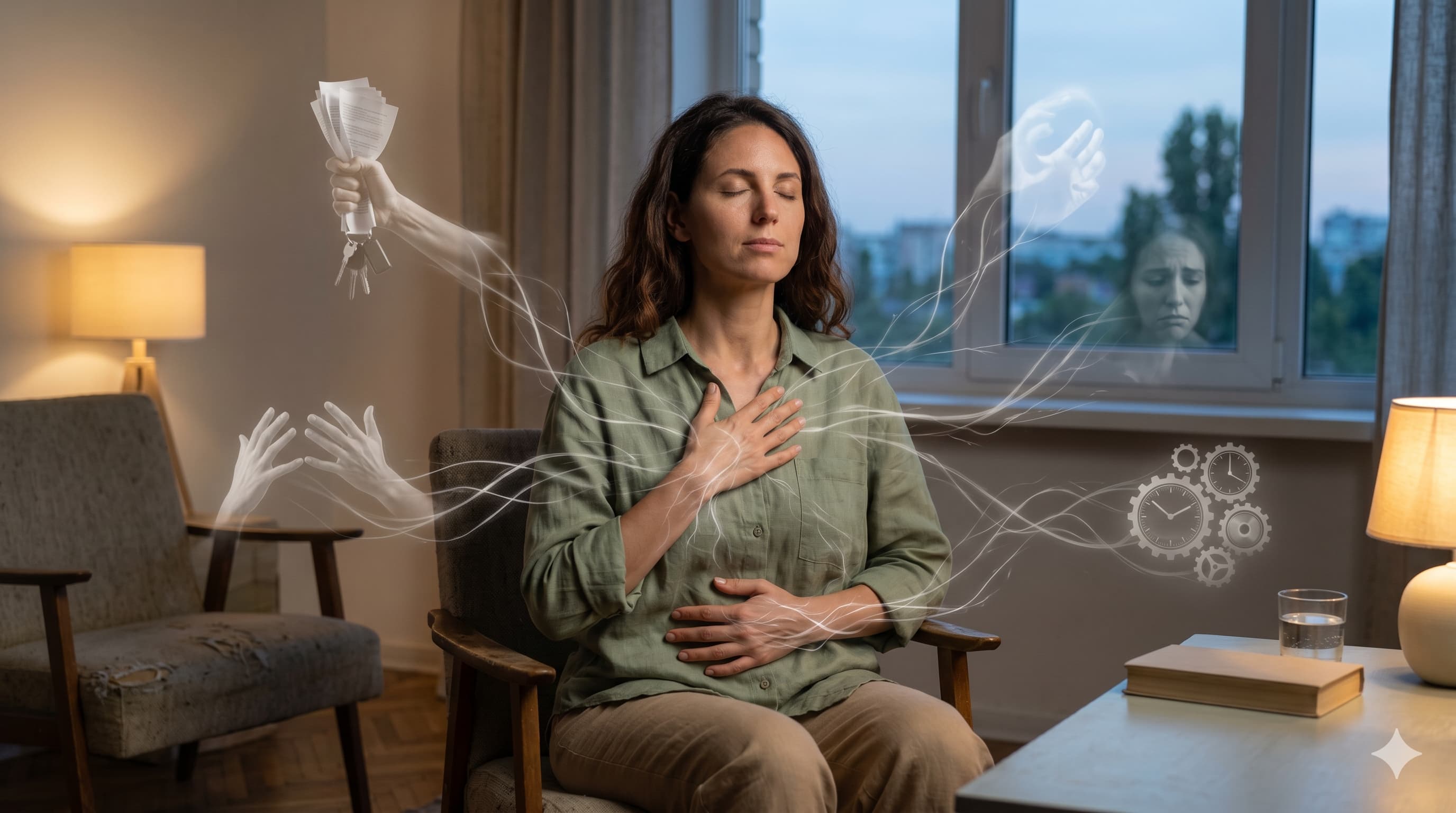
1. Body scan practice. Dedicate 5-10 minutes each day to simply listening to your body. Where is there tension? Where is there pain? What emotion connects to that sensation? This is not diagnosis — it is dialogue. The body speaks in sensations, not words.
2. Symptom and emotion journal. Keep a parallel record: physical symptoms and emotional context. After several weeks, patterns begin to emerge. Headaches after certain meetings? Stomach pain before specific tasks? This is information.
3. Question for the illness. When you are sick, ask yourself: «If this illness were saying something to me, what would it be?» Do not search for the right answer. Simply allow an answer to arrive. Sometimes it is unexpectedly precise.
4. Preventive care. Do not wait for illness as a signal. Create practices that tell your body: «I hear you.» Regular sleep, movement, nutrition, periods of rest without screens — this is not luxury; it is basic respect for physical existence.
5. Working with suppressed emotions. If you know you tend to suppress certain emotions, find safe ways to express them. Therapy, journaling, creativity, physical activity — all of these help the body avoid «storing» what the psyche cannot process.
Illness is not failure and not punishment. It is the language the body uses to speak to consciousness when no other means remain. Learning to hear it before illness strikes is the best thing we can do for our health. And for our karma. Learn more in our article on the karma of health, or explore the connection between emotions and physical wellbeing.
Subscribe to new content
We publish articles about karma, self-discovery and spiritual practices. No spam — only the good stuff.
We never share your email with third parties. Unsubscribe anytime.