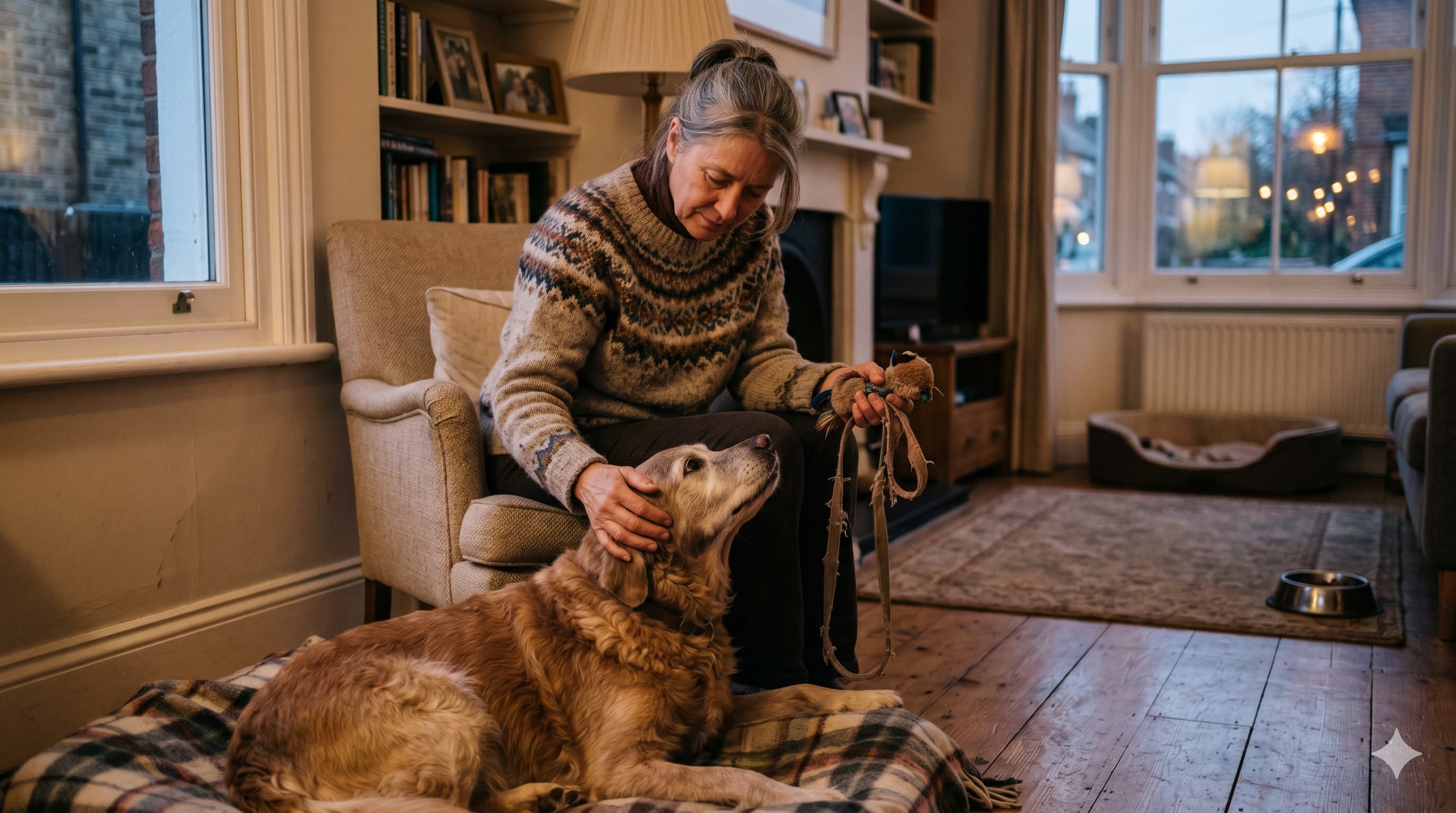
The Karma of Pet Ownership: Responsibility for a Being That Depends on You
According to the American Veterinary Medical Association, more than 67% of American households have at least one pet. In Europe, figures range from 30 to 60%. People get pets out of love, loneliness, a desire to teach children responsibility — and that's good. But behind this decision lies a karmic responsibility that's often underestimated in the moment of acquiring a fluffy creature.
A pet is a being completely deprived of choice about its own life. You chose to take it — it didn't choose you. You determine what it eats, where it lives, how much it moves, how happy it is. This is nearly absolute power. And where there is absolute power — there is absolute karmic responsibility.
The Decision to Get a Pet: Readiness and Responsibility
Animal shelter statistics reveal the karmic problem of the decision to get a pet: in the US alone, approximately 6.5 million cats and dogs enter shelters annually. Of these, roughly 1.5 million are euthanized. Most surrendered pets are not «bad animals.» They are animals taken impulsively, without understanding the responsibility.
What does readiness to get a pet mean?
- Time readiness. Dogs require 1-3 hours of daily interaction, walks, play. Cats need less, but still regular attention. The question: can you provide this not only during «good» life periods, but also in busy times, sick days, crisis moments?
- Financial readiness. Veterinary costs, food, supplies, grooming — these are real expenses. A serious pet illness can cost thousands to tens of thousands of dollars. Are you prepared?
- Long-term readiness. Dogs live 10-15 years, cats up to 20, parrots up to 80 (!), tortoises can outlive multiple owners. How will your life change during this time?
- Life compatibility. Family member allergies, a nomadic lifestyle, frequent moves, rental housing — all must be considered before, not after
The karma test helps you see how much your daily choices account for the needs of those who depend on you.
The Pet as Mirror of the Owner
One of the most intriguing ideas in animal psychology is that pets — especially dogs — reflect their owners' emotional states. This is not mysticism — it's neurobiology.
Research by Linda Horváth at Budapest's ELTE University showed: dogs demonstrate signs of «social contagion» of their owner's emotions. An anxious owner — an anxious dog. A balanced owner — a stable dog. This happens through body language, tone of voice, and hormonal signals (research shows that the owner's cortisol literally synchronizes with the dog's cortisol).
Psychologist Nicholas Dodman described «behavioral disorders» in pets: aggression, anxiety, destructive behavior — often these are symptoms of family problems, not problems of the animal itself. A dog that «destroys things» alone often signals separation anxiety that mirrors the owner's insecurity.
This is karmically significant: the relationship with a pet is a kind of mirror. If the animal is doing poorly — it's worth asking what's happening with you. This is not blame — it's information. The oracle helps you honestly ask yourself uncomfortable questions.
The Karma of Abandoned Animals
An abandoned animal is one of the most painful karmic topics. What happens karmically when a person gives up a pet?
Psychologically: behavioral research in shelters shows that abandoned pets experience genuine psychological trauma. Dogs in shelters show signs of depression, learned helplessness, and chronic stress. This is not a metaphor — these are measurable physiological changes.
Socially: abandoned animals overwhelm the shelter system, some of which practice euthanasia. Each abandoned animal is a link in a chain of systemic crisis.
Karmically: abandoning a being that depended entirely on you and trusted you — this is one of the most direct violations of the karma of trust. The animal cannot understand why it was abandoned. For it, this is simply the disappearance of the one who was its whole world.
This doesn't mean people who surrender animals are unambiguously bad. There are objectively insurmountable circumstances. But karmically both the reason and how you search for the best outcome for the animal matter: careful selection of a new owner, honesty about the pet's quirks, support during the transition.
What Pets Give Us: Karmic Exchange
The relationship with pets is not one-sided responsibility. It's a full karmic exchange in which both human and animal give and receive.
What pets give humans:
Stress reduction. A 2020 meta-analysis in PLOS ONE showed: pet owners demonstrate significantly lower cortisol levels under stress. Physical contact with an animal lowers blood pressure, heart rate, and activates the oxytocin system.
Social connection. Sandra Beham's research showed: pets, especially dogs, are «social catalysts» — their owners have on average 40% more meaningful social interactions with strangers.
Daily structure and meaning. Especially significant for the elderly and people with depression: a pet provides daily structure («I need to get up to feed them»), a need to care, and the feeling that someone needs you.
Unconditional love. Pets — especially dogs — demonstrate love without conditions. This is a psychologically healing experience — especially for people with histories of conditional acceptance.
Developing empathy in children. Children raised with pets demonstrate higher levels of empathy, responsibility, and nurturing capacity.
The Ethics of Breeding vs Adoption
One of the sharp ethical topics around pets is «buy a purebred or adopt from a shelter?»
Arguments for adoption:
- Millions of healthy animals are euthanized in shelters annually due to system overload
- Adoption literally saves the life of a specific being
- Adult shelter pets are often calmer and more predictable than puppies
Arguments for responsible breeding:
- For people with allergies, special needs, or specific tasks (service animals), predictability of characteristics matters
- A responsible breeder ensures health, socialization, and quality of life for animals
Karmically problematic are «puppy mills» — industrial breeding where animals live in appalling conditions for maximum profit. Purchasing from such operations means participating in this system. This is the karma of consumer choice. Read about ecology and karma for the broader context of our relationship with the animal world.
Practice of Mindful Pet Care
Mindful pet care is not only vet visits and quality food. It's a daily practice of presence and respect for another being's needs.
Several practices of a mindful owner:
Daily state check. Each morning, while feeding or walking your pet, consciously notice its state. How does it move? How does it eat? What does its coat, eyes look like? Animals can't tell you they feel bad — you must learn to «read» them.
Quality time. Not just physical presence — but contact. Play where you are genuinely present (not with phone in hand). A walk where you let the dog sniff and explore at its own pace rather than pulling on the leash.
Training from curiosity, not dominance. Positive reinforcement is not only more humane than punishment — it's more effective. This is karmically clean training: cooperation, not coercion.
Veterinary proactivity. Regular preventive visits, vaccinations, parasite treatment — not «when they get sick,» but ongoing care for a being that cannot care for itself.
Planning for the unexpected. Who will care for the pet if you get sick? If you need to travel urgently? If something happens to you? This is not paranoia — it's responsibility for a life you've taken on.
The karma of pet ownership is a microcosm of the larger karma of responsibility for those who depend on us. A pet is a being that cannot protect itself from your decisions. But it gives you something rare in the human world — unconditional love and presence «here and now.» This is an honest exchange. And your task is to respond with equal honesty. Read about the ethics of consumption. Karmic challenges — practical steps toward greater mindful responsibility. The moral compass for ethical questions about our relationship with animals.
Subscribe to new content
We publish articles about karma, self-discovery and spiritual practices. No spam — only the good stuff.
We never share your email with third parties. Unsubscribe anytime.