Volunteering: What Science Says About the Benefits for the Helper
Helper's High: The Neuroscience of Helping
When we help another person voluntarily and selflessly, something remarkable happens in the brain. Neuroscientists have recorded activation of the same reward centers that light up when we receive money or food. This phenomenon is called the helper's high. Professor Stephen Post of Stony Brook University spent decades studying the connection between altruism and well-being and concluded: giving is biologically beneficial.
At its core lies a release of oxytocin, serotonin, and dopamine. Oxytocin lowers cortisol — the stress hormone — strengthens the immune system, and creates a sense of connection with others. Serotonin stabilizes mood, and dopamine generates feelings of meaning and satisfaction. All of this happens not only in the person receiving help, but in the helper — and even in observers.
A 2013 study published in Health Psychology found that people who volunteered for altruistic reasons (rather than for career advancement or social recognition) had significantly lower mortality rates over the following four years. The key was intention — selfless motivation was the strongest predictor of health benefits.
What Happens in the Volunteer's Brain
Researchers at the National Institutes of Health used fMRI to observe brain activity in people who donated money to charity. Subcortical areas activated — the same regions responsible for social reward. The more voluntary the choice, the stronger the activation of the pleasure center.
Another study found that volunteers show reduced activity in the amygdala — the center of fear and anxiety — after helping sessions. Regular volunteering literally rewires neural networks associated with anxiety and depression. In essence, helping others is one of the most effective and accessible ways to care for your own mental health.
Volunteering and Longevity
The Corporation for National and Community Service analyzed data from more than 60,000 Americans and found that people who regularly volunteer live longer than peers who don't. The effect is comparable to quitting smoking.
A meta-analysis of 40 studies published in Psychological Bulletin confirmed: volunteering correlates with lower depression rates, higher subjective well-being, and a 22% reduction in mortality among people over 65. Older volunteers show better cognitive performance — they lose memory more slowly and think more sharply.
The optimal amount of volunteering is around two hours per week. More isn't always better: excessive involvement can lead to burnout. Remember: this is about generosity without self-harm, not self-sacrifice.
Volunteering Across Life Stages
The benefits of volunteering vary by age but are present at every stage of life. For young people, it primarily develops social skills and professional experience. For middle-aged adults, it's a way to maintain meaning during professional and personal transitions. For older adults, it's a powerful tool against isolation and cognitive decline.
Stephen Post, in his book Why Good Things Happen to Good People, describes numerous cases where volunteering became a turning point for people going through difficult periods. The paradox of help: when we focus on others' needs, our own problems shrink and become more manageable.
The Karma of Service: Why Giving Means Receiving
In the concept of karma — both in Eastern philosophy and in psychological terms — actions leave traces. This trace is not mystical: it shows up in neural connections, social relationships, reputation, and self-esteem. Each time we help selflessly, we form a neural pattern of generosity. Over time, it becomes a character trait.
Research by Sonja Lyubomirsky at the University of California, Riverside showed that performing five acts of kindness on a single day of the week increases subjective happiness more effectively than spreading kind acts evenly throughout the week. The concentration of altruistic actions creates a noticeable effect — a kind of karmic pulse.
The connection to altruism and karma is direct: selfless actions trigger positive cycles. People who receive help tend to help others. Volunteers inspire those around them. Communities with active volunteering demonstrate higher levels of social trust and cooperation.
Volunteering as a Gratitude Practice
Helping others is also a form of gratitude for the resources, knowledge, and opportunities we have. When we volunteer at a hospital, we appreciate our own health. When we help at a homeless shelter, we reconsider our own stability. Volunteering shifts attention from what we lack to what we have.
This directly connects to the practice of gratitude: both tools work on the same neural mechanism — shifting from scarcity thinking to abundance thinking. The difference is that gratitude is reflection, and volunteering is action.
How to Start: 5 Steps for Beginners
Many people want to help but don't know where to begin. Here is a practical roadmap.
- Step 1. Assess your resources. What do you have — time, skills, money, connections? Volunteering doesn't require much. Even one hour a week is real help.
- Step 2. Find a matching interest. Helping in an area you genuinely care about is far more sustainable. Love animals? Animal welfare. Interested in education? Tutoring children from low-income families.
- Step 3. Start small. Don't take on commitments you can't keep. Try one one-time project before committing to regular involvement. This reduces anxiety and helps you find the right fit.
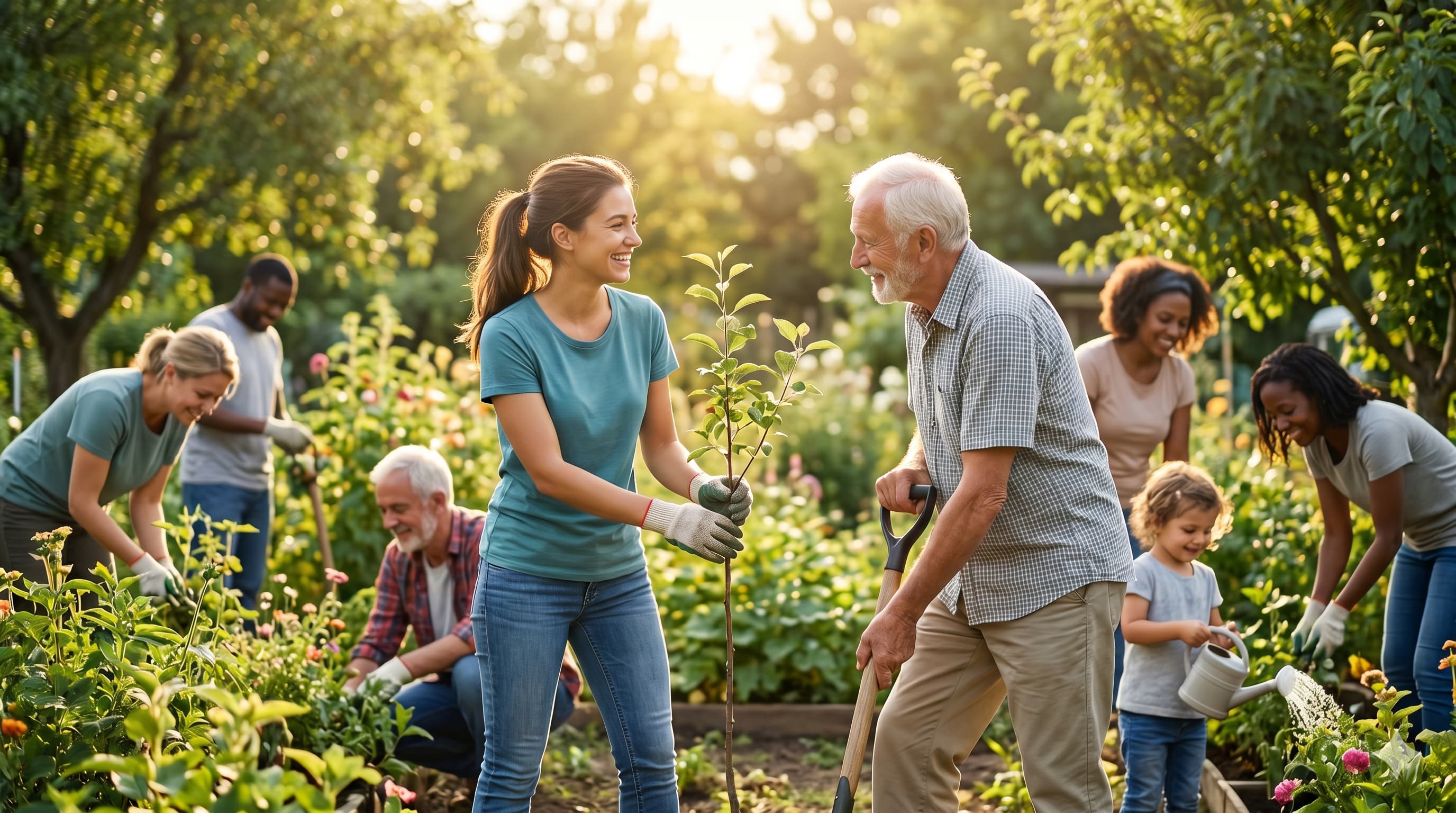
- Step 4. Find community. Group volunteering is significantly more effective and sustainable. The social component is one of the main sources of psychological benefit.
- Step 5. Track your impact. Keep brief notes about your experience. What did you feel before and after? What changed in you? This reflection amplifies the karmic effect of helping.
Remember the psychology of charitable giving: helping must come from desire, not guilt or social pressure. Coerced altruism doesn't produce the same neurobiological effects as free choice.
Check Your Kindness Karma
Volunteering is one of the purest forms of karmic action: you invest resources without guaranteed return — and that's precisely why the return is most powerful. Want to understand how much your daily choices reflect values of care and generosity?
Take the test at karm.top in the Kindness category — 12 real-life situations that reveal how you respond when someone is in need. Not a judgment, a mirror — honest and without blame.
Subscribe to new content
We publish articles about karma, self-discovery and spiritual practices. No spam — only the good stuff.
We never share your email with third parties. Unsubscribe anytime.