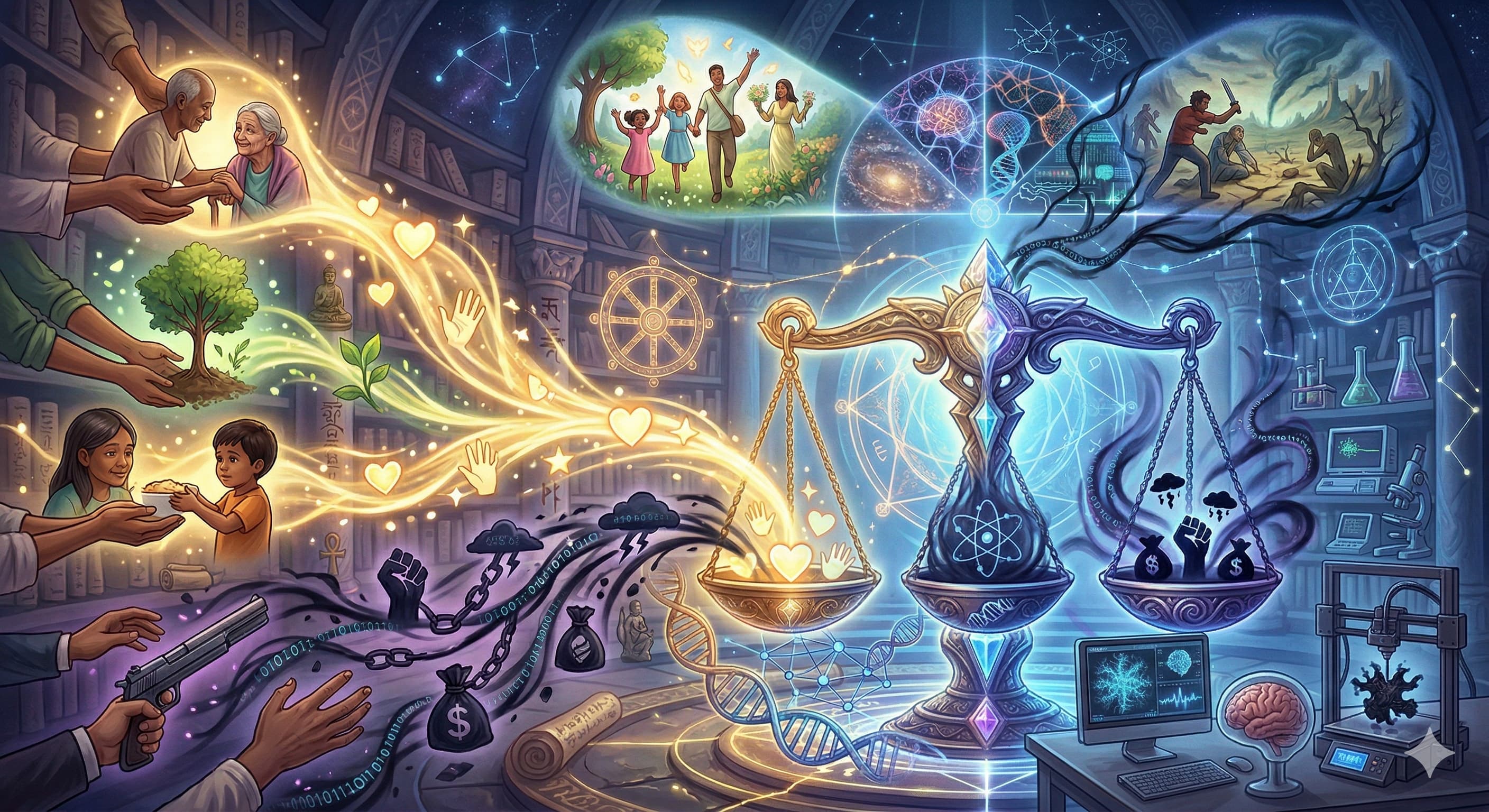
What is Karma: From Ancient Traditions to Modern Science
Karma in Eastern Philosophy
What is karma? This question is asked by millions of people around the world. The word "karma" comes from Sanskrit and literally means "action" or "deed." But behind this simple word lies a profound philosophical concept that has shaped the worldview of hundreds of millions of people for millennia.
In the broadest sense, karma is the law of cause and effect. Every action, every thought, every intention creates consequences that return to you. Good deeds attract good, cruelty and selfishness attract suffering. This is not punishment from above, but a natural law of the universe, similar to the laws of physics.
Buddhist Interpretation
In Buddhism, karma occupies a central place. The Buddha Shakyamuni taught that karma is not fate or predetermination. It is a continuous flow of actions and their consequences that shapes our life in the present and future.
According to Buddhist teaching, karma comes in three types:
- Karma of body — physical actions: helping others, violence, theft
- Karma of speech — words: truth, lies, kind words, slander
- Karma of mind — thoughts and intentions: compassion, greed, envy, goodwill
The most important principle of Buddhist karma is intention. Not the action itself, but the motive behind it determines the karmic weight of the deed. Accidentally causing harm and intentionally causing harm produce different karmic results.
Hindu Interpretation
In Hinduism, karma is closely connected with samsara — the cycle of rebirths — and dharma — the righteous path. Karma determines the conditions of the next incarnation: place of birth, family, abilities, and circumstances of life.
The Bhagavad Gita offers the path to liberation from karma through selfless action (karma yoga). A person must perform their duty without attachment to the result. Act rightly without expecting reward — and karma will not bind you.
What Science Says About Karma
Modern science does not deal with reincarnation and metaphysics. However, research in psychology, neuroscience, and sociology has revealed mechanisms that explain "karmic" patterns on a purely material level.
The Psychology of Reciprocity
One of the most powerful principles of human behavior is reciprocity. People tend to respond to kindness with kindness and to hostility with hostility. This is a deeply rooted evolutionary mechanism.
Professor Robert Cialdini in his classic book "Influence" describes reciprocity as one of six key "weapons of influence." When you do something good for another person, you trigger a powerful psychological impulse in them to respond in kind.
Studies show that people who regularly help others, on average, receive more help during difficult periods. This is karma in the scientific sense — not a mystical law, but the social dynamics of mutual exchange.
Research on Happiness and Altruism
Years of positive psychology research have found a surprising fact: altruistic behavior correlates with personal happiness. People who regularly perform acts of kindness report higher levels of well-being.
Martin Seligman, founder of positive psychology, found that "acts of kindness" — intentional actions for others — are one of the most reliable ways to increase personal happiness levels.
Neuroscience also contributes: when we help others, the brain's reward system activates — the same areas as when receiving material goods. This phenomenon is called the "helper's high." Evolution literally rewarded us for social behavior.
Karma in Everyday Life
You do not have to believe in reincarnation or metaphysical laws to see karma in action. It manifests in the most ordinary situations. Repeated actions create habits. Habits form character. Character determines destiny.
How to Find Out Your Karma Level
At karm.top we have developed a karma measurement system based on real-life situations. You go through 100 scenarios from different areas of life and choose how you would act in each.
Frequently Asked Questions
Is karma a religious concept?
Originally — yes. Karma originated within Hinduism and Buddhism. But today the concept has gone far beyond religion and is used as a metaphor for describing the law of cause and effect in human life.
Can you change your karma?
Yes. Consciously changing your actions changes your "karmic balance." You can start small: one good deed a day, one honest conversation instead of avoidance.
How can I find out my karma level right now?
Take the test at karm.top. 100 real-life situations, honest answers — and you will receive an accurate analysis of your karmic profile.
Subscribe to new content
We publish articles about karma, self-discovery and spiritual practices. No spam — only the good stuff.
We never share your email with third parties. Unsubscribe anytime.