The Karma of Social Insensitivity: Who Are These People Who Just Don't Care?
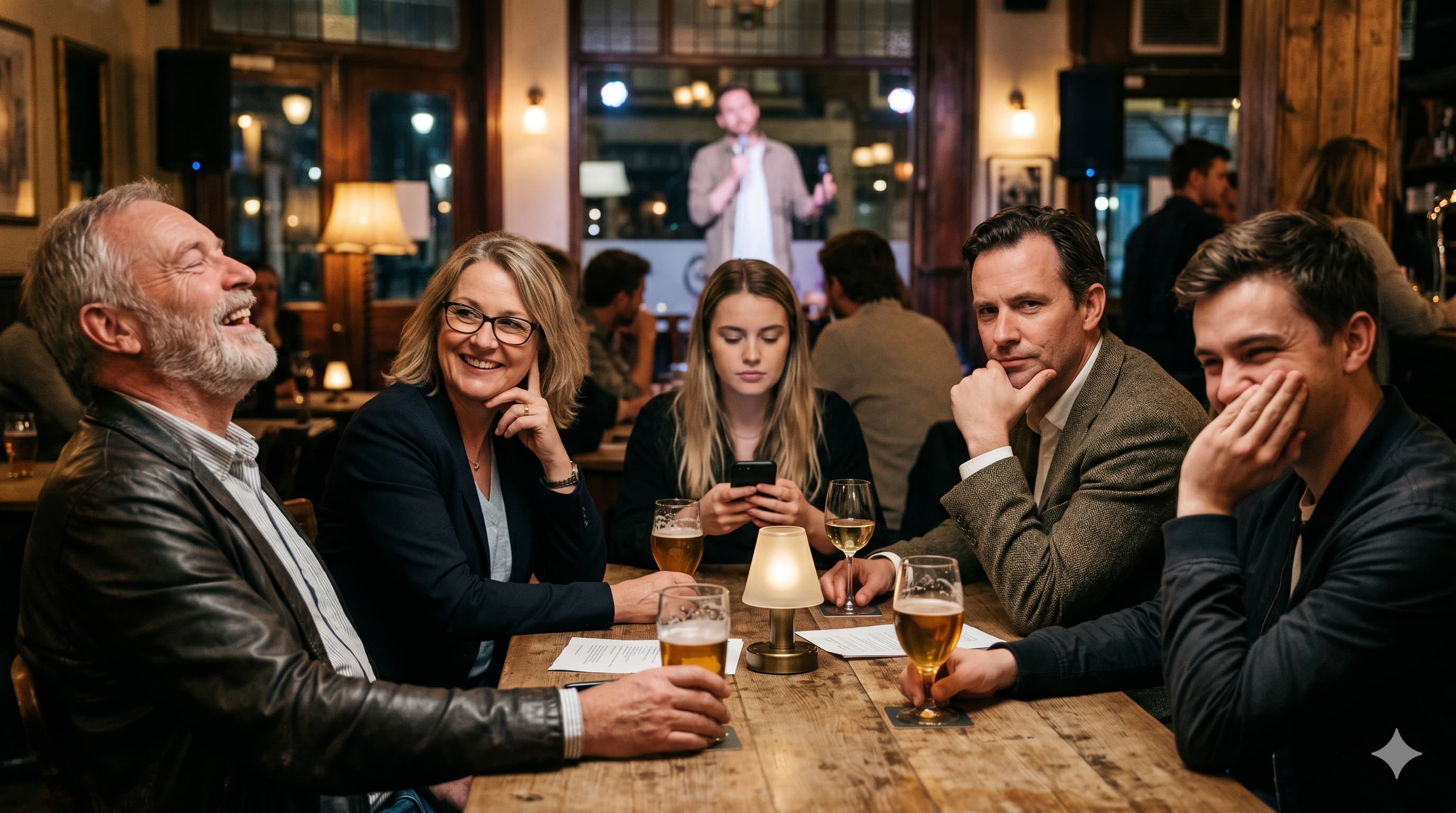
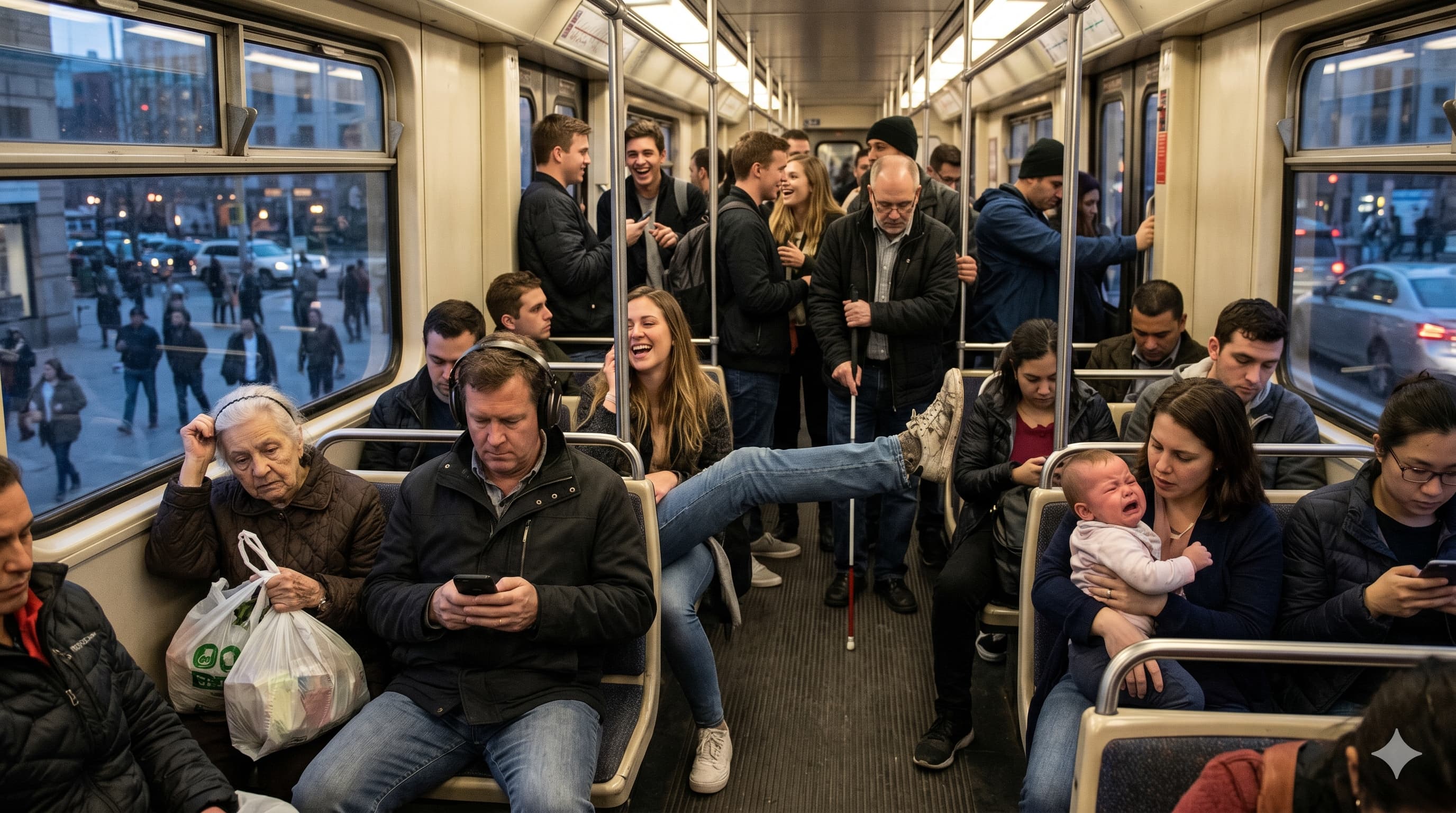
You have certainly encountered these people: they don't notice when someone is struggling in their presence. They interrupt mid-sentence without awareness. They miss nonverbal distress signals entirely. They say something hurtful with no understanding of why the other person is upset. Or, conversely, they understand perfectly well — and genuinely don't care. It is tempting to group all such people under a single label: "cold," "unfeeling," "narcissists." This is convenient, quick, and creates an illusion of understanding. But it is a mistake — both clinically and ethically. Social insensitivity is not a single phenomenon but a wide spectrum encompassing fundamentally different mechanisms: from neurobiological differences that have nothing to do with moral choice, to deliberate and systematic disregard for others. Conflating them means not only making a theoretical error but causing real harm: for people whose insensitivity is part of their neurology rather than their character, this conflation costs them reputation, relationships, and psychological wellbeing. Understanding what you are actually dealing with — in yourself or in another person — is something the moral compass can help illuminate by making your own patterns in ethically charged situations visible.
The Spectrum of Insensitivity: Four Different Mechanisms
Alexithymia is a condition in which a person experiences significant difficulty identifying, distinguishing, and describing their own emotions. Estimates place its prevalence at roughly 8 to 15% of the population. Alexithymia does not mean the absence of emotions — it means the absence of access to them and to their verbalization. A person with alexithymia may experience intense stress without knowing what they are feeling and without having words for it. They are not ignoring your feelings deliberately — they simply cannot read them, because they cannot read their own. Autism spectrum disorder (ASD) involves atypical social communication that neurotypical people frequently interpret as coldness, indifference, or arrogance. But two decades of research paint a far more complex picture: many autistic people experience more intense emotional responses than neurotypicals — they simply find it significantly harder to read social signals and express their reactions in conventional form. Narcissistic personality disorder (NPD) is a fundamentally different mechanism: a specific organization of the self in which one's own grandiosity and needs occupy the entire psychological space, systematically crowding out others' needs and values. Psychopathy and antisocial personality disorder constitute yet another distinct mechanism: neurobiological data point to structural and functional characteristics of the amygdala and orbitofrontal cortex associated with reduced processing of others' emotional signals.
Dark Triad vs. Neurodivergence: Why Conflating Them Causes Harm
The dark triad — narcissism, psychopathy, and Machiavellianism — describes behavioral patterns united by the deliberate use of others for one's own benefit. Neurodivergence (autism, ADHD, alexithymia, and other neurological variations) comprises neurobiological variations with no principled correlation to moral choice or ethical intention. Confusion between these categories has specific and serious harmful consequences. First: autistic people are systematically and wrongly stigmatized as narcissistic, manipulative, or deliberately cruel — simply because their communication style departs from neurotypical conventions. This causes them significant psychological harm and deprives them of needed support. Second: some people with genuine dark triad traits have learned to simulate neurodivergence ("I'm autistic, so I don't understand social norms") as convenient cover for manipulative behavior. Third: this produces harmful generalizations in both directions. A key diagnostic criterion: the dark triad correlates with deliberate exploitation of others and often with enjoyment of power over them; a person with dark triad traits understands social norms — they deliberately violate them. A neurodivergent person typically deeply desires social connection but lacks the tools to achieve it through conventional means.
Corporate and Systemic Insensitivity: How Organizations Become Callous
Social insensitivity is not only an individual phenomenon. Organizations, institutions, and systems can be structurally insensitive — not because every individual participant is malicious, but because the architecture of processes, incentives, and norms creates an environment in which empathy and sensitivity are systematically suppressed or penalized. Organizational behavior research shows that companies with rigid hierarchies, intense internal competition, and short decision horizons either systematically filter out high-empathy people at the selection stage or create conditions in which displaying empathy is read as weakness and is punished. Milgram's and Zimbardo's experiments demonstrated clearly: ordinary people with normal moral dispositions in certain systemic conditions exhibit behavior neurologically and behaviorally indistinguishable from clinical callousness. This is not an excuse — it is an explanation of the mechanism. Systemic insensitivity accumulates karmic debts: it leads to trust erosion, departure of high-empathy individuals, accumulation of silent resentment, and ultimately to corporate scandals and reputational catastrophes.
The Karma of Working with Insensitive People: Strategy Matters
If there are significant people in your life with high social insensitivity, your interaction strategy must fundamentally depend on the nature of that insensitivity. With neurodivergent individuals (autism, alexithymia): maximally explicit communication — stating your needs directly and clearly, without counting on hints being read; patience with atypical forms of expressing care; readiness for "double empathy" — effort from both sides, not one-way accommodation. With narcissistic patterns: clear and consistently maintained limits; abandoning the expectation of awakening empathy through emotional appeals (this rarely works); focusing on the logic of consequences rather than emotional arguments. With psychopathic patterns: prioritizing your own safety over compassion — this is not heartlessness, it is realistic assessment. It is crucial not to confuse "strategic compassion" with cynicism: the first is the capacity to maintain a humane relationship with a person while realistically assessing their limitations and protecting yourself from their destructive patterns. For more on narcissistic relationship dynamics, see the piece on the psychology of narcissism.
When Insensitivity Is Adaptive
It is important to acknowledge that context radically shifts the ethical assessment of insensitivity. In certain contexts, a reduced empathic response is adaptive, functional, and even necessary. Surgeons, military medics, firefighters, paramedics, palliative care workers, therapists — all must maintain the capacity for action in situations that would paralyze an untrained person. This is called "professional distance" or "managed empathy." People who have survived chronic trauma or prolonged abuse frequently develop a reduced empathic response as a protective psychological mechanism — this is not a sign of bad character, it is psychological survival. The crucial distinction is between adaptive numbing (temporary, context-dependent, reversible) and chronic, generalized detachment that extends across all domains of life and relationship. Developing empathy is not a question of simply maximizing sensitivity but of having flexible, conscious access to empathic response when it is appropriate and functional.
Calibrating Empathic Response: Not Maximization but Flexibility
One of the most practically valuable insights from the study of social insensitivity is the idea that the ethical goal consists not in maximizing empathy but in its flexible calibration depending on context. Paul Bloom (Yale University) in his provocative book Against Empathy (2016) provides compelling data: people with high but uncalibrated affective empathy often make less fair and less consequentially effective moral decisions — they are overwhelmed by emotional response to the immediately visible and concrete, leaving them blind to large-scale, distant, or abstract consequences. The optimal ethical strategy is not "feel as much as possible" but the ability to flexibly switch between affective empathy (sharing another's feelings) and cognitive empathy (understanding what another feels without necessarily experiencing it yourself). Cognitive empathy is more durable, more scalable across large numbers of people, and enables more considered decisions in complex situations. The piece on toxic relationships provides important additional context: it is often precisely hyperactive, uncalibrated empathy that makes us structurally vulnerable to manipulation by people with narcissistic or psychopathic patterns.
Building Genuine Empathic Skill: Beyond Awareness
Understanding the spectrum of social insensitivity matters not only for how we respond to others but for how we develop our own empathic capacities. Research by Sara Konrath (Indiana University) and colleagues has tracked empathy levels in college students over three decades, finding a notable decline particularly in the 2000s — coinciding with the rise of social media and increasing social fragmentation. The good news from neuroscience: empathy is not a fixed trait. The brain's mirror neuron systems and the default mode network, both strongly associated with social cognition, show meaningful plasticity in response to specific practices. Reading literary fiction, engaging in perspective-taking exercises, sustained one-on-one conversations, and therapeutic training all produce measurable increases in empathic accuracy. The implication is that social insensitivity, where it is not neurobiologically constrained, is in significant part a learned and therefore changeable pattern — a finding that should inform both individual development and institutional culture-building efforts.
The karma of social insensitivity is more complex than it first appears. Judging all insensitive people identically means ignoring fundamental differences in mechanisms, motivations, and capacities for change. This is unjust toward neurodivergent people who expend enormous effort on social adaptation, and ineffective toward those who genuinely cause harm deliberately. Precise understanding of the nature of insensitivity is not merely an academic task. It is an ethical responsibility toward ourselves and toward those with whom we live and work.
Subscribe to new content
We publish articles about karma, self-discovery and spiritual practices. No spam — only the good stuff.
We never share your email with third parties. Unsubscribe anytime.