The Karma of Traditions: Why Family and Cultural Customs Matter
Every year, at the same time, your family gathers around the same table. The same words are spoken, the same dishes prepared, the same stories told. Children find it boring and predictable. Adults understand: in this predictability lies something priceless. But what exactly? Why do traditions matter so much — and when do they stop being alive?
Traditions are a karmic bridge between generations. They don't merely transmit customs — they transmit meanings, values, identity, and connection. Destroying traditions severs the threads connecting us to those who came before. Blindly following dead traditions turns living culture into a museum. How do we find the balance?
What Tradition Is: Living and Dead
The word "tradition" comes from the Latin traditio — "transmission." Sociologist Edward Shils distinguished between "living traditions" and "dead customs." A living tradition is a practice that preserves its essence and adapts its form. It is alive because people understand why they perform it, and that "why" remains relevant. A dead custom is form without content — people perform it because "it's always been this way," without understanding or vital experience of meaning.
From a karmic perspective, a living tradition creates energy of connection, meaning, and transmission. A dead custom creates energy of compulsion and alienation. Take the karma test to understand how your connections to the past shape your present karmic profile.
How Traditions Transmit Generational Karma
Developmental psychology researchers have shown that traditions serve several key psychological functions, especially for children and adolescents.
Identity. Traditions answer the question "who am I?": I am someone who does this at this time with these people. Research shows: children and adolescents who know their family history and participate in family traditions demonstrate higher self-esteem and better cope with crises.
Security. Recurring rituals create predictability — and predictability creates a sense of security. In a changing and unpredictable world, traditions are anchors.
Meaning. Traditions are embodied values. When we celebrate a religious holiday, we're not simply eating special food — we're communing with a particular world of meaning.
Connection. Traditions are moments when "I" becomes "we." Neuroscience shows that collective synchronized actions (singing, dancing, ritual gestures) release oxytocin and strengthen social bonds.
The transmission of karma through traditions operates on several levels: through explicit values (what we say aloud), implicit values (how we behave in the ritual), stories (what narratives live in our family), and atmosphere (what emotional quality the tradition carries).
When Traditions Cause Harm
Not all traditions are karmically healthy. Some traditions cause harm — either to specific individuals or to groups of people. How to recognize a toxic tradition?
A toxic tradition reproduces injustice. Traditional gender roles in which women bear all the household burden while formally holding equal status. Traditions of exclusion — "people like that aren't welcome in our family" — based on race, religion, sexual orientation. Traditions of humiliation disguised as "humor" or "character building."
A toxic tradition is not open to discussion. "It's always been this way" is the answer to any question about meaning. This is a sign that the tradition is held together not by meaning but by fear of change.
A toxic tradition punishes non-conformity. "You're breaking with tradition" is used as a weapon of pressure, not an invitation to conversation. From a karmic perspective, following a toxic tradition out of fear or inertia is participation in the reproduction of harm. Read about family karma — how family patterns shape our destiny.
Creating New Traditions in a Modern Family
The good news: traditions don't have to be inherited — they can be created. And this is one of the most karmically powerful acts: consciously choosing what to pass on to the next generations.
Research shows that new traditions work just as well as inherited ones — provided they are filled with meaning and are consistent. A family that began "Sunday morning pancakes" three years ago can have just as strong a tradition as a family that has done it for a hundred years.
How to create new traditions? Start with the question: what matters to our family? What values do we want to embody in rituals? If connection is important — create a gathering ritual. If creativity — a ritual of making together. If gratitude — a ritual of expressing thanks.
Don't try to create too many traditions at once. One or two that are rich in meaning and regular are better than ten that are formal.
Ask the Oracle which new traditions could become living anchors for your family. Take on the challenge of creating one new conscious family tradition.
Cultural Traditions in a New Country
One of the most complex karmic tasks for a migrant is how to preserve cultural traditions in a new country. Research by John Berry shows: children of migrants who maintained connection with the culture of their ancestors while simultaneously integrating into the new culture fare significantly better than those who fully assimilated.
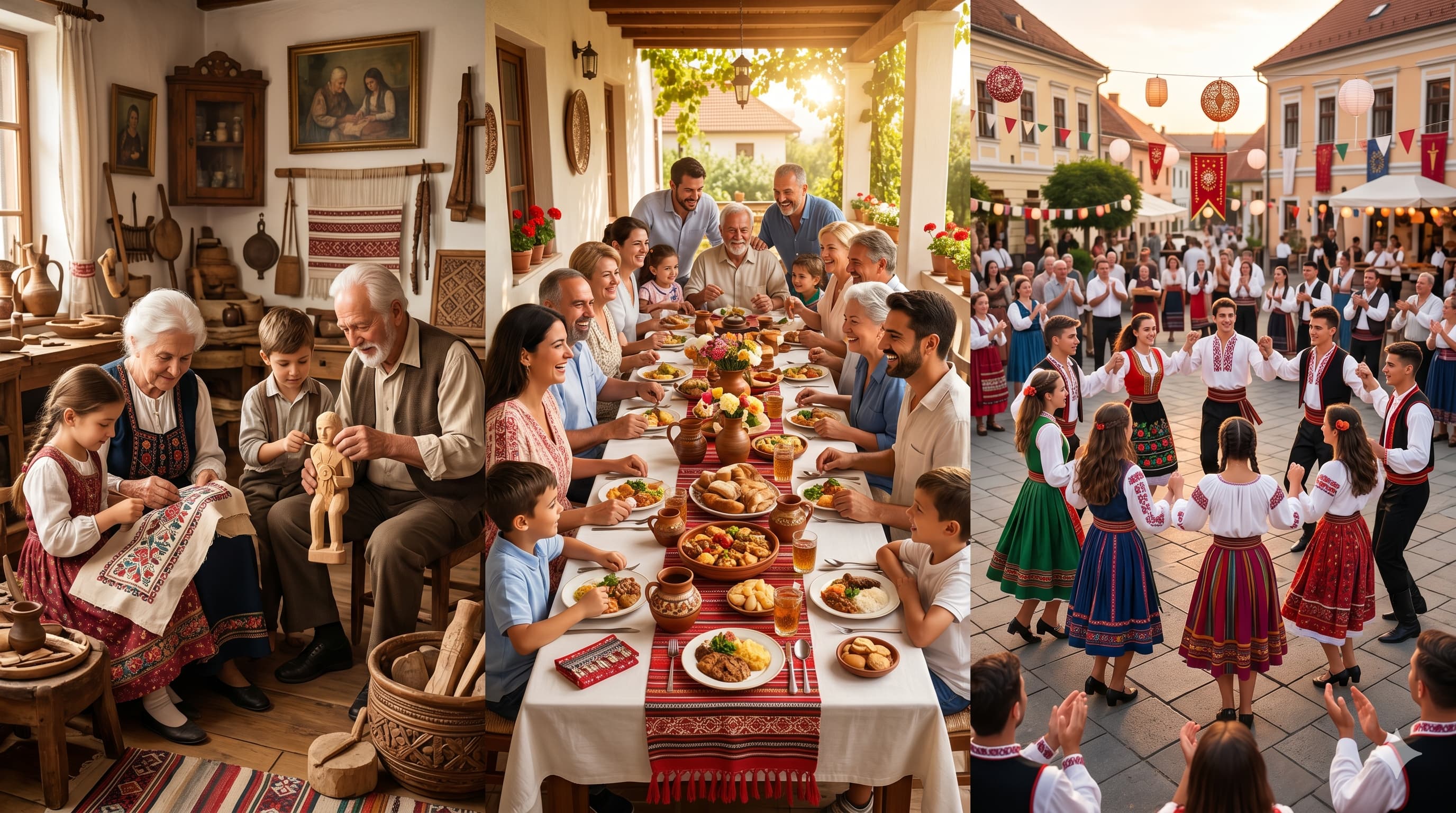
Cultural traditions are not political statements. They are not a way of saying "our culture is better." They are a way of preserving roots that nourish a person. Cooking ancestors' dishes, singing lullabies in grandmother's language, celebrating native holidays — this is not a rejection of the new life. It is acceptance of the fullness of one's identity. Yet flexibility matters too. Some traditions may adapt to the new context. Some may fall away — and that is natural.
Revision of Family Traditions: Practical Work
Karmically aware engagement with traditions involves periodic revision: what is living, what is dead, what needs to be transformed.
Sit down and list all your family traditions — large and small. Holidays, weekly rituals, ways of welcoming guests, mealtimes, family stories told again and again.
For each tradition, ask three questions:
- Do I know why it is done? Is there a living meaning I can articulate?
- Does this tradition create connection and joy — or compulsion and guilt?
- Do I want to pass this tradition to my children? What exactly do I want to pass on — the form or the essence?
Living traditions — sustain and nourish them. Dead customs — release without guilt. Traditions with living essence but outdated form — transform: preserve the meaning, update the form.
Read about intergenerational patterns — how the legacy of ancestors affects us and how to engage with it consciously. Traditions are not a prison of the past. They are living bridges between yesterday and tomorrow. And we — the living links in this chain — bear responsibility for what we pass on next.
Subscribe to new content
We publish articles about karma, self-discovery and spiritual practices. No spam — only the good stuff.
We never share your email with third parties. Unsubscribe anytime.